


Hey there! As a filter element supplier, I get asked a ton of questions about our products. One question that comes up a lot is, "What is the differential pressure of a filter element?" Well, I'm here to break it down for you in a way that's easy to understand.
First off, let's talk about what differential pressure actually means. In simple terms, differential pressure is the difference in pressure between two points in a system. When it comes to filter elements, it's the difference between the pressure on the upstream side (the side where the fluid or gas enters the filter) and the pressure on the downstream side (the side where it exits).
Why does this matter? Well, the differential pressure of a filter element is a crucial indicator of its performance and condition. As the filter does its job of trapping contaminants, these particles build up on the filter media. This buildup creates resistance to the flow of fluid or gas through the filter, which in turn causes the differential pressure to increase.
Think of it like a traffic jam on a highway. When there are only a few cars on the road, traffic flows smoothly, and there's not much resistance. But as more and more cars pile up, it becomes harder for the cars to move forward, and the "pressure" on the road increases. The same goes for a filter element. When it's clean, fluid or gas can pass through easily, and the differential pressure is low. But as it gets clogged with dirt and debris, the flow is restricted, and the differential pressure goes up.
Monitoring the differential pressure of a filter element is important for a few reasons. For starters, it helps you know when the filter needs to be replaced. If the differential pressure gets too high, it means the filter is so clogged that it's no longer doing its job effectively. This can lead to reduced flow rates, increased energy consumption, and even damage to the equipment downstream.
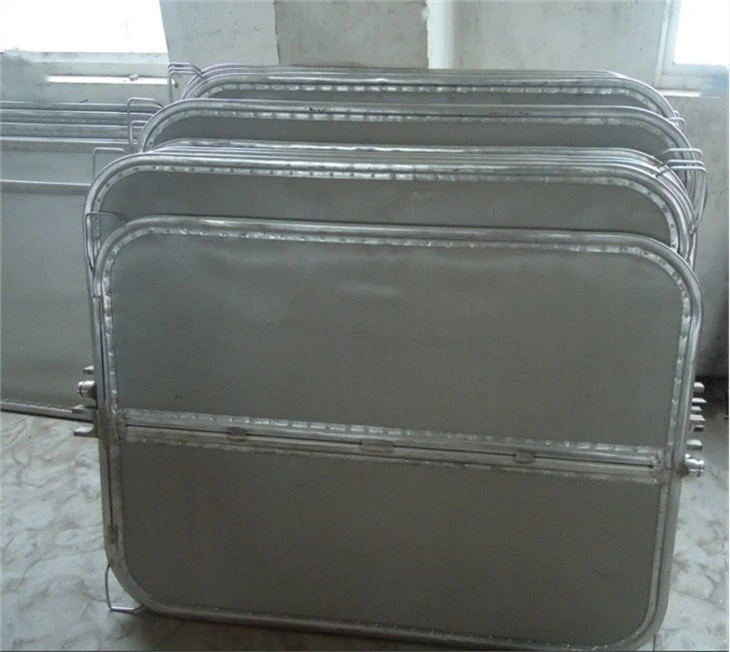
Let's say you're using a Ss Wire Mesh Filter Leaf in an industrial process. If the differential pressure across the filter starts to spike, it could be a sign that the filter is reaching the end of its lifespan. Ignoring this could result in a decrease in the quality of the filtered product or even cause the process to shut down.
Another reason to keep an eye on differential pressure is to optimize the performance of your filtration system. By understanding how the differential pressure changes over time, you can adjust the operating conditions of the system to ensure that the filter is working as efficiently as possible. For example, you might be able to adjust the flow rate or the pressure of the fluid or gas entering the filter to keep the differential pressure within an acceptable range.
Now, how do you measure the differential pressure of a filter element? There are a few different ways to do this. One common method is to use a differential pressure gauge. This device measures the difference in pressure between the upstream and downstream sides of the filter and displays it on a dial or digital readout. Some advanced filtration systems even have sensors that can continuously monitor the differential pressure and send the data to a control system, which can then automatically adjust the system parameters as needed.
When it comes to our filter elements, we design them to have a specific differential pressure rating. This rating tells you what the expected differential pressure will be under normal operating conditions. For example, our Aquacomputer Filter With Stainless Steel Mesh is engineered to maintain a low differential pressure while still providing excellent filtration performance.
It's also important to note that different types of filter elements will have different differential pressure characteristics. For instance, a filter with a fine mesh will generally have a higher differential pressure than one with a coarser mesh. This is because the fine mesh traps smaller particles, which creates more resistance to the flow.
Let's take a look at a Stainless Steel Filter Mesh. The size of the openings in the mesh determines how much fluid or gas can pass through and how effectively it can trap contaminants. A mesh with smaller openings will be better at catching tiny particles but will also cause more resistance and a higher differential pressure.
As a filter element supplier, we offer a wide range of products to meet different needs and applications. Whether you're looking for a filter for a water treatment plant, an air filtration system, or an industrial process, we've got you covered. Our team of experts can help you choose the right filter element based on your specific requirements, including the desired differential pressure.
If you're in the market for a new filter element or have questions about differential pressure, don't hesitate to reach out. We're here to help you make the best choice for your filtration needs. Whether you need a quick replacement or a custom-designed solution, we're committed to providing you with high-quality products and excellent customer service.
In conclusion, understanding the differential pressure of a filter element is essential for maintaining the efficiency and performance of your filtration system. By monitoring the differential pressure, you can ensure that your filter is working properly, know when it's time to replace it, and optimize the operation of your equipment. So, if you're looking for reliable filter elements that offer consistent differential pressure performance, look no further. Contact us today to discuss your requirements, and let's work together to find the perfect filtration solution for you.

References
- "Filtration Basics: Understanding Differential Pressure." Filtration + Separation Magazine.
- "Principles of Filtration and Filter Selection." Industrial Filtration Handbook.


