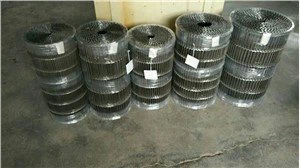

In the oil industry, leaf filters play a crucial role in ensuring the quality and purity of oil products. As a leading supplier of Oil Industry Leaf Filters, I've witnessed firsthand the common problems that operators encounter and have developed effective solutions to address them. In this blog, I'll share some of the most prevalent issues with oil industry leaf filters and how we can solve them.
1. Clogging of Filter Media
One of the most common problems with oil industry leaf filters is the clogging of filter media. Over time, solid particles in the oil accumulate on the filter surface, reducing the flow rate and increasing the pressure drop across the filter. This not only affects the filtration efficiency but also can lead to premature failure of the filter.


Causes:
- High levels of suspended solids in the oil feed.
- Inadequate pre - filtration, allowing large particles to reach the leaf filter.
- Incorrect selection of filter media with a pore size that is too small for the particle size distribution in the oil.
Solutions:
- Implement proper pre - filtration steps. Use a Horizontal Pressure Filter as a pre - filter to remove large particles before the oil enters the leaf filter. This can significantly reduce the load on the leaf filter and extend the life of the filter media.
- Choose the appropriate filter media based on the characteristics of the oil and the particle size distribution. For example, if the oil contains a high proportion of fine particles, a filter media with a smaller pore size may be required. However, it's important to balance the pore size to avoid excessive clogging.
- Regularly backflush or clean the filter media. This can be done by reversing the flow of the oil through the filter to dislodge the accumulated particles. Some leaf filters are equipped with automatic backflushing systems, which can greatly simplify the maintenance process.
2. Leakage Issues
Leakage is another common problem in oil industry leaf filters. Leaks can occur at various points, such as the seals between the filter leaves, the connections between the filter housing and the piping, or through damaged filter media.
Causes:
- Worn or damaged seals. Over time, the seals can degrade due to exposure to oil, high temperatures, and pressure.
- Improper installation of the filter leaves or the filter housing. If the components are not properly aligned or tightened, it can lead to leaks.
- Physical damage to the filter media, such as tears or holes, which can allow oil to bypass the filtration process.
Solutions:
- Regularly inspect and replace the seals. Use high - quality seals that are resistant to the oil and the operating conditions. This can prevent leaks from occurring and ensure the integrity of the filtration system.
- Ensure proper installation of the filter components. Follow the manufacturer's installation instructions carefully, and use the appropriate tools and techniques to ensure a tight and secure fit.
- Replace damaged filter media promptly. If a tear or hole is detected in the filter media, replace it immediately to prevent oil from bypassing the filtration process and to maintain the filtration efficiency.
3. Inconsistent Filtration Performance
In some cases, oil industry leaf filters may exhibit inconsistent filtration performance. This can manifest as variations in the filtrate quality, flow rate, or pressure drop over time.
Causes:
- Uneven distribution of the oil feed across the filter leaves. If the oil is not evenly distributed, some filter leaves may become overloaded while others are underutilized, leading to inconsistent filtration performance.
- Changes in the properties of the oil feed, such as viscosity, temperature, or particle concentration. These changes can affect the filtration process and result in inconsistent performance.
- Aging or degradation of the filter media. Over time, the filter media can lose its effectiveness due to wear, chemical reactions, or fouling, leading to inconsistent filtration performance.
Solutions:
- Install a distribution system to ensure even distribution of the oil feed across the filter leaves. This can help to balance the load on the filter leaves and improve the overall filtration performance.
- Monitor and control the properties of the oil feed. Maintain consistent operating conditions, such as temperature and viscosity, to ensure stable filtration performance. If necessary, adjust the filtration process parameters based on the changes in the oil feed properties.
- Replace the filter media at regular intervals. Establish a maintenance schedule based on the operating conditions and the expected life of the filter media. This can help to ensure consistent filtration performance and prevent premature failure of the filter.
4. High Energy Consumption
Oil industry leaf filters can consume a significant amount of energy, especially when operating at high pressures or with high flow rates. High energy consumption not only increases the operating costs but also has environmental implications.
Causes:
- High pressure drop across the filter. As the filter media becomes clogged, the pressure drop increases, requiring more energy to pump the oil through the filter.
- Inefficient pump operation. If the pump is not properly sized or operated, it can consume more energy than necessary.
- Excessive flow rate. Operating the filter at a higher flow rate than required can increase the energy consumption without necessarily improving the filtration efficiency.
Solutions:
- Optimize the filter design and operation to reduce the pressure drop. This can be achieved by using a larger filter area, selecting the appropriate filter media, and ensuring proper pre - filtration.
- Use energy - efficient pumps. Choose pumps that are designed for the specific application and operating conditions, and ensure that they are properly sized and maintained.
- Adjust the flow rate to match the filtration requirements. Avoid operating the filter at a higher flow rate than necessary, as this can increase the energy consumption without improving the filtration efficiency.
5. Difficulty in Filter Cleaning and Maintenance
Cleaning and maintaining oil industry leaf filters can be a challenging task, especially in large - scale operations. Difficulty in accessing the filter components, complex cleaning procedures, and the need for specialized equipment can make maintenance time - consuming and costly.
Causes:
- Complex filter design. Some leaf filters have a complex structure, which can make it difficult to access the filter media for cleaning and replacement.
- Lack of proper cleaning equipment. Without the right tools and equipment, it can be difficult to effectively clean the filter media and remove the accumulated particles.
- Inadequate training of maintenance personnel. If the maintenance personnel are not properly trained, they may not be able to perform the cleaning and maintenance tasks correctly, leading to poor filtration performance.
Solutions:
- Choose a filter design that is easy to clean and maintain. Look for filters with a simple and accessible structure, and consider features such as removable filter leaves or easy - to - open filter housings.
- Invest in proper cleaning equipment. Use specialized cleaning tools and equipment, such as high - pressure water jets or ultrasonic cleaners, to effectively clean the filter media.
- Provide comprehensive training to the maintenance personnel. Ensure that they are familiar with the filter design, operation, and maintenance procedures, and provide them with the necessary skills and knowledge to perform the tasks correctly.
As an Oil Industry Leaf Filter supplier, we are committed to providing high - quality products and solutions to address these common problems. Our Horizontal Wire Mesh Filter and Horizontal Leaf Filter are designed with advanced features to ensure efficient and reliable filtration performance. If you are facing any of these problems with your oil industry leaf filters or are interested in upgrading your filtration system, we invite you to contact us for a detailed discussion. Our team of experts will be happy to assist you in finding the best solution for your specific needs.
References
- Smith, J. (2018). Filtration Technology in the Oil Industry. Elsevier.
- Jones, R. (2020). Maintenance and Troubleshooting of Industrial Filters. Wiley.