


Hey there! I'm a supplier of honeycomb belts, and I've been getting a bunch of questions lately about what exactly these belts are made of. So, I thought I'd write this blog to break down the chemical composition of a honeycomb belt for you.
First off, let's talk about what a honeycomb belt is. If you're not familiar, you can check out Honeycomb Conveyor Belt for more info. These belts are super useful in a variety of industries, from food processing to electronics manufacturing. They're called honeycomb belts because of their unique structure, which looks a bit like a honeycomb. This structure gives them some great properties, like good air permeability and the ability to handle different types of products.
Now, onto the chemical composition. The main materials used in honeycomb belts typically include polymers and sometimes some additives.
Polymers
- Polypropylene (PP)
Polypropylene is a widely used polymer in honeycomb belts. It's lightweight, which is a big plus because it reduces the overall weight of the conveyor system. This can lead to lower energy consumption, which is always a good thing for businesses. PP is also resistant to many chemicals, so it can handle contact with different substances without getting damaged easily. For example, in a food processing plant where there might be acids or alkalis from cleaning agents or food residues, a polypropylene honeycomb belt can stand up to the exposure.
It has a relatively high melting point, around 160 - 170°C. This means it can withstand some heat during the conveyor process, like in applications where the products being transported are warm or there's some friction-generated heat.
- Polyethylene (PE)
There are different types of polyethylene, such as high - density polyethylene (HDPE) and low - density polyethylene (LDPE). HDPE is often used in honeycomb belts because of its high strength and stiffness. It can support heavier loads without deforming too much. LDPE, on the other hand, is more flexible. Sometimes, a combination of the two can be used to get a balance between strength and flexibility.
PE is also resistant to moisture, which is important in environments where there's a lot of humidity or where the belts might come into contact with water. For instance, in a car wash or a fish processing plant, a polyethylene honeycomb belt can keep its integrity even when wet.
- Polyurethane (PU)
Polyurethane is another polymer that's used in honeycomb belts, especially when you need good abrasion resistance. In industries where the belt is constantly rubbing against other components or the products being transported are rough, a PU honeycomb belt can last longer. It also has good elasticity, which means it can stretch a bit without breaking. This is useful in conveyor systems where there are some tension changes during operation.
PU can be formulated to have different hardness levels. So, depending on the specific application, you can choose a softer or harder polyurethane honeycomb belt. For example, in a textile manufacturing plant where the products are delicate, a softer PU belt might be used to avoid damaging the fabrics.
Additives
-
Antioxidants
Antioxidants are added to the polymers in honeycomb belts to prevent oxidation. Oxidation can cause the polymers to break down over time, which can lead to a loss of strength and other properties. By adding antioxidants, the lifespan of the honeycomb belt can be extended. These antioxidants work by reacting with the oxygen in the air before it can react with the polymer molecules. -
UV Stabilizers
If the honeycomb belt is going to be used outdoors or in an environment where it's exposed to sunlight, UV stabilizers are added. Ultraviolet rays from the sun can damage the polymers, causing them to become brittle and crack. UV stabilizers absorb the UV radiation and convert it into heat, which is then dissipated. This helps to protect the belt from the harmful effects of the sun. -
Flame Retardants
In some industries, like electronics manufacturing or in areas where there's a risk of fire, flame retardants are added to the honeycomb belt. These additives work by either preventing the ignition of the belt or by slowing down the spread of fire if it does start. This can help to improve the safety of the workplace.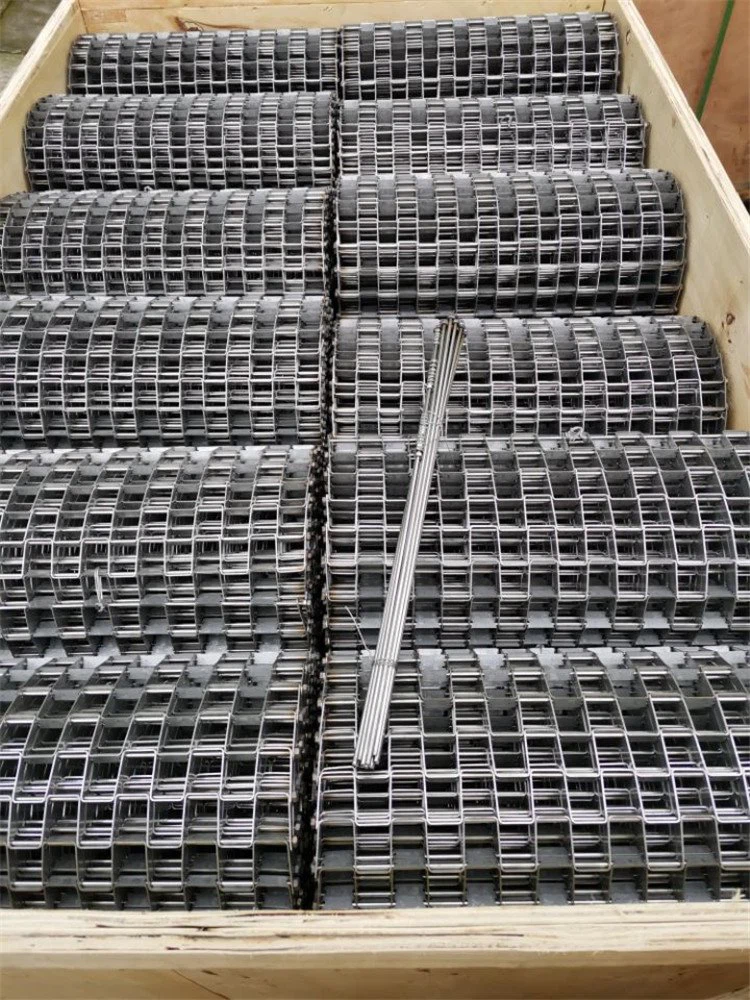

-
Lubricants
Lubricants are sometimes added to reduce friction between the belt and other parts of the conveyor system. This can improve the efficiency of the conveyor and also reduce wear and tear on the belt. For example, in a high - speed conveyor, a lubricant - added honeycomb belt can run more smoothly and last longer.
If you're interested in Honeycomb Conveyor or Honeycomb Conveyor Mesh Belt, and want to know more about the specific chemical composition that suits your needs, or you're looking to purchase honeycomb belts for your business, feel free to reach out. I'm here to help you find the best solution for your conveyor requirements. Whether you need a belt with high chemical resistance for a chemical plant or a belt with good abrasion resistance for a mining operation, we can work together to figure out the right honeycomb belt for you.
References
- "Plastics in Conveyor Belt Technology" - A technical guide on the use of polymers in conveyor belts.
- "Additives for Polymer Materials" - A book that details the functions and types of additives used in polymers.


