


Hey there! As a supplier of Spiral Conveyor Belts, I often get asked about the differences between spiral conveyor belts and traditional conveyor belts. So, I thought I'd write this blog post to break it down for you all.
1. Design and Structure
Let's start with the design. Traditional conveyor belts are usually long, flat, and run in a straight line or with simple turns. They're like the basic workhorses of the conveyor world. You've got a belt that moves between two or more pulleys, and that's pretty much it. They're easy to set up and understand, and you can find them in all sorts of industries, from manufacturing plants to airports.
On the other hand, spiral conveyor belts have a unique spiral design. Instead of running in a straight line, they wind around a central axis in a spiral shape. This design allows them to move products vertically or horizontally in a much smaller footprint. It's like taking a long, straight conveyor and coiling it up to save space. For example, in a food processing plant where floor space is limited, a spiral conveyor belt can be a game - changer. You can move products up multiple levels without taking up a huge amount of floor area.
2. Space Utilization
Space is a big deal in any industrial setting. Traditional conveyor belts need a lot of linear space to move products over a certain distance. If you want to move something from one end of a large factory to the other, you'll need a long, straight run of conveyor, which can take up a significant amount of floor space. And if you need to change the direction of the conveyor, you'll have to add additional equipment and more space for the turns.
Spiral conveyor belts, however, are all about maximizing space. Because of their spiral design, they can move products vertically or horizontally in a very compact area. For instance, in a warehouse where you're trying to move inventory from the ground floor to an upper level, a spiral conveyor belt can do the job in a much smaller footprint compared to a traditional conveyor belt. This is especially useful in urban areas where real estate is expensive, and every square foot of floor space counts.
3. Product Handling
When it comes to product handling, both types of conveyor belts have their strengths. Traditional conveyor belts are great for handling large, heavy, and irregularly shaped items. Since they're flat and straight, they can provide a stable surface for products to rest on. For example, in a car manufacturing plant, traditional conveyor belts are used to move car bodies along the assembly line. The flat surface ensures that the heavy car bodies stay in place during the manufacturing process.
Spiral conveyor belts, on the other hand, are better suited for handling smaller, lighter products, especially those that need to be moved vertically. They can gently move products up or down the spiral without causing much agitation. In the food industry, spiral conveyor belts are commonly used to move items like cookies, pastries, and small packaged goods. The smooth, continuous movement of the spiral conveyor belt helps prevent damage to these delicate products.
4. Speed and Efficiency
In terms of speed, traditional conveyor belts can generally achieve higher linear speeds. Since they're straight and have a simple design, there are fewer mechanical limitations on how fast they can move. In high - speed manufacturing environments, such as electronics assembly lines, traditional conveyor belts can move products at very high speeds to keep up with the production rate.

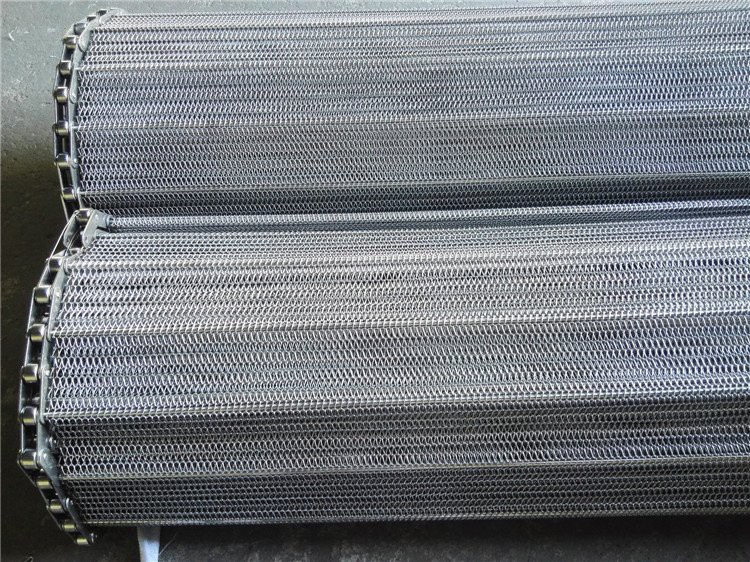
Spiral conveyor belts, while they may not be as fast in terms of linear speed, can be more efficient in terms of overall throughput. Because they can move products vertically in a compact space, they can reduce the time it takes to move products between different levels in a facility. For example, in a multi - level distribution center, a spiral conveyor belt can quickly move packages from the receiving area to the storage area on an upper floor, eliminating the need for time - consuming manual handling or long, slow - moving traditional conveyors.
5. Maintenance and Durability
Maintenance is an important consideration for any conveyor system. Traditional conveyor belts are relatively easy to maintain. Since they have a simple design, it's easy to access the components for inspection and repair. The pulleys, belts, and motors are usually straightforward to replace if they break down. However, because they often operate in long, straight runs, they may require more frequent belt replacements due to wear and tear over a large surface area.
Spiral conveyor belts, on the other hand, have a more complex design, which can make maintenance a bit more challenging. The spiral shape means that there are more components that need to be inspected and maintained, such as the spiral guides and the specialized pulleys. However, modern spiral conveyor belts are designed to be durable and reliable. With proper maintenance and regular inspections, they can have a long service life.
6. Applications
Traditional conveyor belts are used in a wide range of industries. They're commonly found in manufacturing plants, mining operations, and airports. In manufacturing, they're used to move raw materials, work - in - progress, and finished products along the production line. In mining, they're used to transport ore and other materials from the mine to the processing plant. At airports, they're used to move luggage between different areas of the terminal.
Spiral conveyor belts have more specialized applications. They're often used in industries where space is limited and vertical movement is required, such as the food industry, pharmaceutical industry, and warehousing. In the food industry, they're used for tasks like cooling, freezing, and baking. For example, a Food Mesh Belt can be used in a spiral conveyor to move food products through a cooling tunnel. In the pharmaceutical industry, they're used to move small vials and tablets between different processing stages. And in warehousing, they're used to move inventory between different levels of a multi - level storage facility.
7. Cost
Cost is always a factor when choosing a conveyor system. Traditional conveyor belts are generally less expensive to purchase and install. Their simple design means that the components are more readily available and less expensive to manufacture. However, over the long term, the cost of operating and maintaining a traditional conveyor belt can be higher, especially if it requires frequent belt replacements.
Spiral conveyor belts are more expensive to purchase and install due to their complex design and specialized components. However, they can offer cost savings in the long run. Their ability to save space can reduce the cost of real estate, and their efficient throughput can increase productivity, which can offset the initial investment.
Conclusion
So, there you have it - the main differences between spiral conveyor belts and traditional conveyor belts. Each type has its own advantages and disadvantages, and the choice between the two depends on your specific needs. If you have a lot of space, need to move large and heavy products, and want a simple and inexpensive system, a traditional conveyor belt might be the way to go. But if you're short on space, need to move products vertically, and want to improve efficiency, a Spiral Conveyor Belt could be the better option.
If you're in the market for a conveyor belt and need more information, feel free to reach out. We're here to help you make the right choice for your business. Whether you're looking for a Furnace Mesh Belt, a food mesh belt, or a spiral conveyor belt, we've got you covered. Let's have a chat and see how we can meet your conveyor needs.
References
- Conveyor Belt Handbook, various industry experts
- Industrial Conveyor Systems: Design and Applications, published by industry research group
- Case studies from different industries on conveyor belt usage


