


Spiral conveyor belts are essential in various industries, from food processing to manufacturing. They're like the unsung heroes, quietly doing their job to keep things moving smoothly. As a spiral conveyor belt supplier, I've seen firsthand the importance of choosing the right material for these belts. So, let's dive into what materials spiral conveyor belts are usually made of.

Rubber
Rubber is one of the most common materials for spiral conveyor belts, and it's easy to see why. It's flexible, which makes it perfect for the tight turns that spiral conveyors often require. Rubber belts can handle a wide range of temperatures, from cold storage to hot processing areas. They're also resistant to many chemicals, oils, and abrasions, which means they can last a long time even in tough environments.
In the food industry, rubber belts are a popular choice because they're easy to clean and can meet strict hygiene standards. They can be used for conveying all sorts of food products, from fresh produce to baked goods. And since rubber is non - porous, it doesn't absorb liquids or bacteria, making it a safe option for food handling.
However, rubber belts do have some drawbacks. They can be affected by UV light over time, which can cause them to crack and degrade. Also, they might not be suitable for applications where high - heat resistance is needed for extended periods.
PVC (Polyvinyl Chloride)
PVC is another widely used material for spiral conveyor belts. It's known for its excellent chemical resistance, which makes it ideal for industries where belts might come into contact with various chemicals, such as the pharmaceutical and chemical manufacturing industries.
PVC belts are also lightweight, which makes them easier to install and operate. They have a smooth surface, which is great for conveying small or delicate items without causing damage. In addition, PVC belts can be customized with different thicknesses and additives to improve their performance in specific applications.
One of the advantages of PVC belts is their cost - effectiveness. They're generally less expensive than some other materials, making them a popular choice for budget - conscious businesses. But like rubber, PVC belts can be affected by high temperatures. Prolonged exposure to heat can cause the PVC to soften and lose its shape.
Polyurethane
Polyurethane is a high - performance material that's becoming increasingly popular for spiral conveyor belts. It offers excellent abrasion resistance, which means it can withstand the wear and tear of continuous operation. This makes it a great choice for industries that deal with heavy or sharp objects, such as the mining and recycling industries.
Polyurethane belts are also very flexible, allowing them to navigate the tight curves of spiral conveyors with ease. They have good resistance to oils, greases, and many chemicals, which makes them suitable for a wide range of applications. In the food industry, food - grade polyurethane belts are available, which can be used for conveying food products safely.
However, polyurethane belts can be more expensive than rubber or PVC belts. But considering their long lifespan and high performance, the investment can be worth it in the long run.
Metal
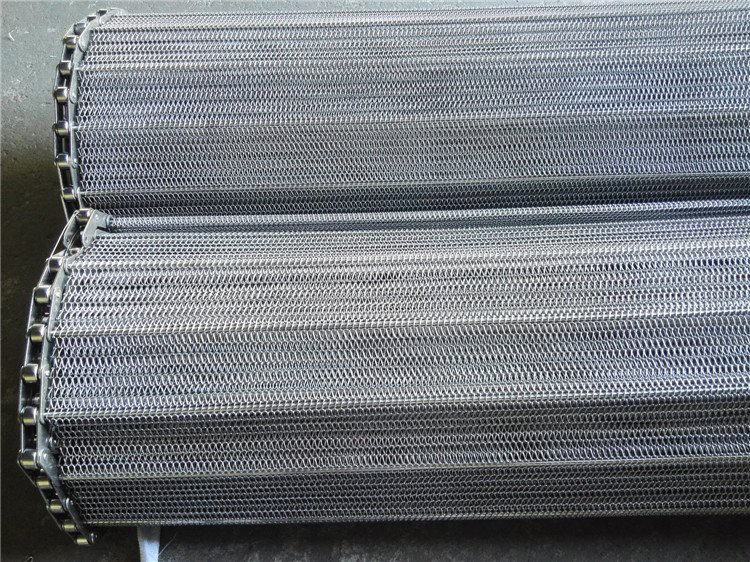
Metal belts, especially those made of stainless steel, are used in many industrial applications. Stainless steel belts are incredibly durable and can withstand high temperatures, making them suitable for applications such as heat treatment, baking, and drying. They're also resistant to corrosion, which is important in industries where belts might be exposed to moisture or chemicals.
The Stainless Steel Mesh Belt is a type of metal belt that's commonly used in spiral conveyors. Its open mesh design allows for excellent air circulation, which is useful in applications where ventilation is required, such as in food drying or cooling processes.
Metal belts do have some limitations. They're heavier than rubber, PVC, or polyurethane belts, which means they require more power to operate. They're also more expensive to manufacture and install. Additionally, metal belts can be noisy during operation.
Mesh Belts
Mesh belts come in various materials, including stainless steel, carbon steel, and plastic. The Food Mesh Belt is often used in the food industry because it allows for easy cleaning and drainage. It can be used for conveying food products through washing, cooking, or cooling processes.
The Ladder Mesh Belt is another type of mesh belt that's commonly used in spiral conveyors. Its ladder - like structure provides good support for the conveyed items and allows for efficient movement around the spiral path.
Mesh belts are versatile and can be customized to meet specific requirements. They can be made with different mesh sizes, wire diameters, and configurations to suit different applications. However, like metal belts, they can be more expensive and require more maintenance compared to some other belt materials.
Choosing the Right Material
When it comes to choosing the right material for a spiral conveyor belt, there are several factors to consider. The first is the type of product being conveyed. If it's food, then materials that meet food - grade standards, such as rubber, polyurethane, or food - grade PVC, are necessary. If the product is heavy or sharp, then a more abrasion - resistant material like polyurethane or metal might be required.
The operating environment is also crucial. High - temperature applications call for materials like stainless steel or heat - resistant rubber. If the belt will be exposed to chemicals, then PVC or materials with good chemical resistance are the way to go.
Cost is always a consideration. While some materials might be more expensive upfront, they could save money in the long run due to their longer lifespan and lower maintenance requirements.
As a spiral conveyor belt supplier, I'm here to help you make the right choice. I've got a wide range of belts made from different materials, and I can provide you with all the information you need to select the best belt for your specific application. Whether you're in the food industry, manufacturing, or any other sector that uses spiral conveyors, I can offer you high - quality belts that will meet your needs.
If you're interested in purchasing a spiral conveyor belt or just want to learn more about the different materials and their applications, don't hesitate to reach out. I'm happy to have a chat and discuss your requirements. Let's work together to find the perfect conveyor belt solution for your business.
References
- Conveyor Belt Handbook, various industry publications
- Manufacturer specifications for different conveyor belt materials
- Industry research on the performance and applications of conveyor belt materials


