


Hey there! As a mesh belt supplier, I've been getting a bunch of questions lately about the load-bearing capacity of mesh belts. So, I thought I'd sit down and write this blog to clear things up.
First off, let's talk about what load-bearing capacity actually means. In simple terms, it's the maximum amount of weight a mesh belt can handle without breaking or getting damaged. This is super important because if you use a mesh belt that can't handle the load, it'll wear out quickly, and you'll end up with all sorts of problems like production delays and extra costs.
There are a few factors that can affect the load-bearing capacity of a mesh belt. One of the biggest ones is the material it's made from. Different materials have different strengths. For example, stainless steel mesh belts are known for their high strength and durability. They can handle heavy loads and are also resistant to corrosion, which makes them great for all sorts of industrial applications. You can check out our High Temperature Mesh Belt made from high-quality stainless steel. It's designed to withstand high temperatures and heavy loads, perfect for industries like metal heat treatment and glass manufacturing.
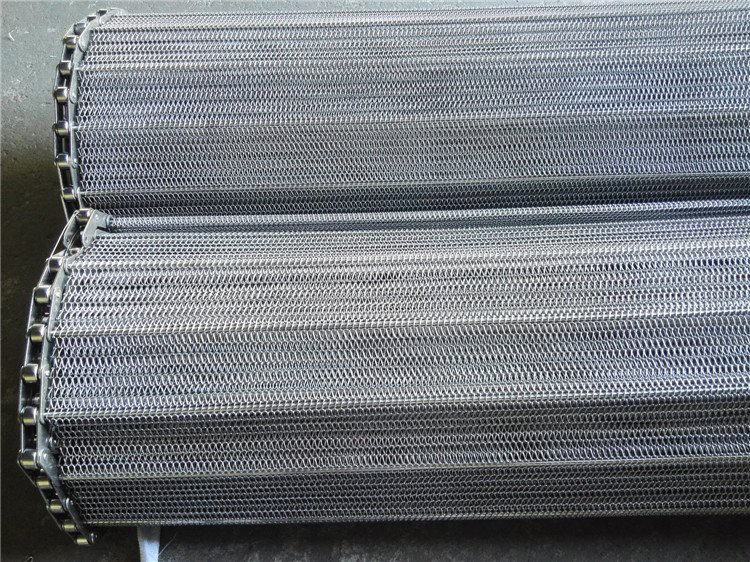
Another factor is the mesh design. The way the wires are woven together can have a big impact on how much weight the belt can carry. A tightly woven mesh with smaller openings generally has a higher load-bearing capacity than a loosely woven one with larger openings. This is because the tight weave distributes the weight more evenly across the belt. For instance, our Net Conveyor Belt has a unique mesh design that provides excellent load distribution, allowing it to handle a significant amount of weight while still maintaining smooth operation.
The thickness of the wires used in the mesh also matters. Thicker wires can support more weight. However, you also need to consider the flexibility of the belt. If the wires are too thick, the belt might become too rigid and difficult to bend around pulleys, which can cause problems in the conveyor system.
The application environment is another crucial factor. If the mesh belt is used in a harsh environment with high temperatures, chemicals, or abrasive materials, its load-bearing capacity might be reduced. For example, in the food industry, mesh belts need to be able to handle the weight of the food products while also being resistant to cleaning agents and high humidity. Our Food Mesh Belt is specially designed for this purpose. It's made from food-grade materials that can withstand the rigorous cleaning and sanitation requirements of the food industry, while still having a good load-bearing capacity.
Now, let's talk about how to calculate the load-bearing capacity of a mesh belt. Unfortunately, there's no one-size-fits-all formula. It depends on all the factors we've just discussed. But generally, manufacturers will provide load-bearing capacity charts based on different belt sizes, materials, and mesh designs. These charts are a great starting point, but it's always a good idea to consult with an expert if you have specific requirements.
When choosing a mesh belt for your application, it's important to overestimate the load a little bit. This gives you a safety margin and ensures that the belt won't fail under normal operating conditions. You also need to consider the dynamic load, which is the additional force exerted on the belt when it's in motion. This can be caused by acceleration, deceleration, or sudden stops.
In addition to the load-bearing capacity, you also need to think about the belt's lifespan. A belt that's constantly overloaded will wear out much faster than one that's used within its capacity. Regular maintenance, such as cleaning and lubrication, can also help extend the life of the belt.
So, how do you know if you're using the right mesh belt for your application? Well, if the belt is sagging, stretching, or breaking frequently, it might be a sign that it's not strong enough to handle the load. On the other hand, if the belt is too strong for the application, you might be spending more money than you need to.
As a mesh belt supplier, we have a wide range of mesh belts to choose from, each with different load-bearing capacities. Whether you need a belt for a light-duty application like conveying small parts in an electronics factory or a heavy-duty application like moving large steel coils in a metalworking plant, we've got you covered.
If you're still not sure which mesh belt is right for you, don't hesitate to reach out to us. Our team of experts is always ready to help you find the perfect solution for your specific needs. We can provide you with detailed information about the load-bearing capacity of our belts and help you make an informed decision.
In conclusion, understanding the load-bearing capacity of a mesh belt is essential for ensuring the smooth operation of your conveyor system. By considering factors like material, mesh design, wire thickness, and application environment, you can choose the right belt that can handle the load and last for a long time. If you're in the market for a mesh belt, give us a shout, and let's start a conversation about your requirements.

References
- Industrial Conveyor Belt Handbook
- Mesh Belt Manufacturing Standards and Guidelines


