


Hey there! I'm a supplier of Flat Flex Belts, and today I wanna chat about something super important: the impact resistance of a flat flex belt.
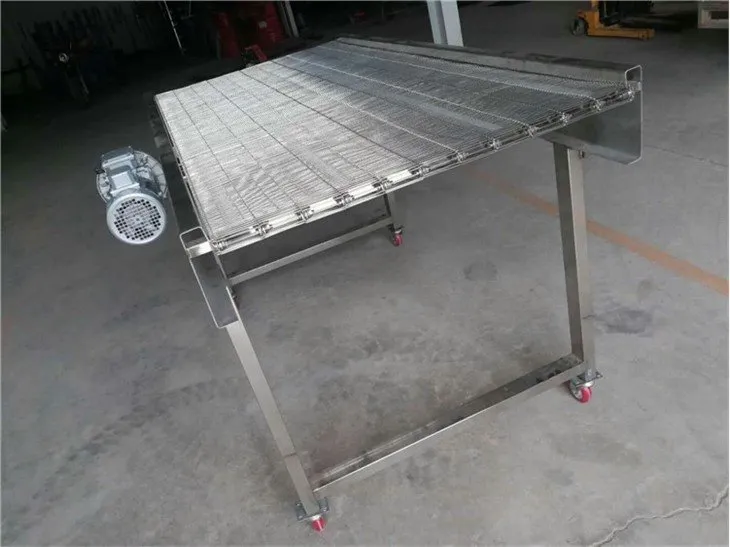

First off, let's get a clear idea of what a flat flex belt is. It's a type of conveyor belt made up of interlocking wires or rods that form a flat, flexible surface. These belts are used in a wide range of industries, from food processing to automotive manufacturing. They're known for their durability, flexibility, and ability to handle various loads.
Now, when we talk about impact resistance, we're referring to the belt's ability to withstand sudden shocks or blows without getting damaged. In industrial settings, belts often face impacts from falling objects, machinery vibrations, or even rough handling. A belt with poor impact resistance can quickly develop cracks, breaks, or other forms of damage, which can lead to costly downtime and replacements.
So, what factors affect the impact resistance of a flat flex belt?
Material Quality
The material used to make the belt is a crucial factor. High - quality materials, like Stainless Steel Flat Flex Belt, generally offer better impact resistance. Stainless steel is strong, corrosion - resistant, and can handle a fair amount of stress. It has good ductility, which means it can deform to some extent under impact without breaking. On the other hand, lower - grade materials may be more brittle and prone to cracking when hit.
Belt Design
The design of the flat flex belt also plays a big role. Belts with a more robust interlocking mechanism are better at distributing the impact force. For example, a belt with a tight - fitting link design can transfer the shock across a larger area of the belt, reducing the stress on any single point. Additionally, the pitch (the distance between the links) of the belt can affect its impact resistance. A smaller pitch may provide more flexibility but could also make the belt more vulnerable to certain types of impacts.
Manufacturing Process
How the belt is manufactured matters too. A well - made belt will have uniform link sizes, smooth edges, and proper heat treatment. Heat treatment can improve the hardness and toughness of the belt, enhancing its ability to resist impacts. If the manufacturing process is shoddy, there may be weak spots in the belt that are more likely to fail under impact.
Load and Operating Conditions
The type of load the belt is carrying and the operating conditions it's exposed to are important considerations. If the belt is constantly handling heavy, sharp objects, it will face more severe impacts compared to a belt used for lighter, smoother items. Also, the speed at which the belt operates can affect the impact force. Higher speeds can increase the intensity of the impact when an object hits the belt.
Let's take a look at some real - world scenarios where impact resistance is crucial.
In the food industry, Food Conveyor Wire Belt and Flat Flex Food Belt are widely used. These belts may encounter impacts from food products being loaded or unloaded, or from equipment vibrations. For example, in a bakery, large loaves of bread or heavy trays of pastries can drop onto the belt. A belt with good impact resistance will ensure that it doesn't break or get damaged, preventing any contamination of the food products and keeping the production line running smoothly.
In the automotive industry, flat flex belts are used to transport parts during the manufacturing process. Heavy engine components or metal parts can be dropped onto the belt, and if the belt can't handle the impact, it can lead to production delays and costly repairs.
So, how can you test the impact resistance of a flat flex belt?
One common method is the pendulum impact test. In this test, a pendulum is swung to strike the belt, and the amount of energy absorbed by the belt is measured. A belt that can absorb more energy without breaking has better impact resistance. Another way is to conduct real - world simulations, where the belt is exposed to impacts similar to those it will face in its actual operating environment.
As a supplier, I understand the importance of providing belts with excellent impact resistance. That's why we use high - quality materials, advanced manufacturing techniques, and rigorous quality control measures. We want to ensure that our customers get belts that can stand up to the toughest conditions.
If you're in the market for a flat flex belt and are concerned about impact resistance, don't hesitate to reach out. We can provide you with detailed information about our products, including their impact - resistant properties. Whether you need a belt for the food industry, automotive sector, or any other application, we've got you covered.
Contact us to start a conversation about your specific requirements. We're here to help you find the perfect flat flex belt that meets your needs and offers long - lasting performance.
References:
- "Conveyor Belt Handbook" by Industry Experts
- Journal of Material Science and Engineering articles on belt durability


