


Hey there! As a supplier of Flat Flex Food Belts, I've had my fair share of chats with folks in the food industry. One question that pops up a lot is, "What's the difference between a flat flex food belt and other types of food belts?" Well, let's dig into it.
The Basics of Flat Flex Food Belts
First off, let's talk about what a flat flex food belt is. A flat flex food belt is made up of interlocking wire strands that form a flat, flexible surface. These belts are typically made from stainless steel, which makes them durable, easy to clean, and resistant to corrosion. They're designed to handle a variety of food products, from small snacks to large cuts of meat.
One of the key features of a flat flex food belt is its flexibility. Unlike some other types of food belts, flat flex belts can be easily bent and shaped to fit different conveyor systems. This makes them a great choice for applications where space is limited or where the conveyor needs to make sharp turns.

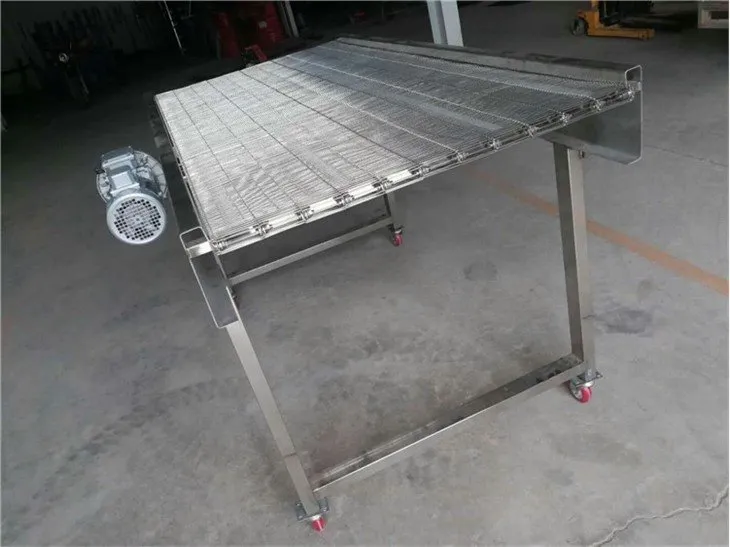
Another advantage of flat flex food belts is their open design. The gaps between the wire strands allow for air and liquids to pass through, which is important for processes like drying, cooling, and washing. This open design also makes it easier to clean the belt, as debris and food particles can fall through the gaps rather than getting trapped on the surface.
Comparing with Other Types of Food Belts
PVC Belts
PVC (polyvinyl chloride) belts are a common type of food belt. They're known for their smooth surface, which makes them ideal for transporting products that need to be kept clean and free of scratches. PVC belts are also relatively inexpensive and easy to install.
However, PVC belts have some limitations. They're not as durable as flat flex food belts, especially in high-temperature or high-moisture environments. PVC belts can also be difficult to clean, as food particles can stick to the surface. Additionally, PVC belts are not as flexible as flat flex belts, which can make them a poor choice for applications that require sharp turns or complex conveyor layouts.
Modular Plastic Belts
Modular plastic belts are made up of individual plastic modules that are linked together to form a continuous belt. These belts are known for their strength and durability, as well as their ability to handle heavy loads. Modular plastic belts are also easy to clean and maintain, as individual modules can be replaced if they become damaged.
But, modular plastic belts have their drawbacks too. They're more expensive than flat flex food belts, and they can be difficult to install and adjust. Modular plastic belts also have a limited range of flexibility, which can make them unsuitable for some applications.
Rubber Belts
Rubber belts are another popular choice for food processing. They're known for their excellent grip, which makes them ideal for transporting products that are slippery or have irregular shapes. Rubber belts are also resistant to abrasion and chemicals, which makes them suitable for a variety of applications.
However, rubber belts have some disadvantages. They're not as hygienic as flat flex food belts, as food particles can get trapped in the rubber surface. Rubber belts can also be damaged by high temperatures and sharp objects, which can limit their lifespan.
Advantages of Flat Flex Food Belts in the Food Industry
Now that we've compared flat flex food belts with other types of food belts, let's take a closer look at why they're such a great choice for the food industry.
Hygiene
Hygiene is a top priority in the food industry, and flat flex food belts are designed with this in mind. The open design of the belt allows for easy cleaning, and the stainless steel material is resistant to bacteria and corrosion. This makes flat flex food belts a great choice for applications where food safety is critical.
Versatility
Flat flex food belts are incredibly versatile. They can be used in a wide range of food processing applications, from baking and frying to freezing and packaging. The flexibility of the belt allows it to be used in conveyor systems with complex layouts, and the open design makes it suitable for processes like drying, cooling, and washing.
Durability
Stainless steel flat flex belts are built to last. They can withstand high temperatures, heavy loads, and frequent cleaning without losing their shape or performance. This makes them a cost-effective choice in the long run, as they require less frequent replacement than other types of food belts.
Where to Find Flat Flex Food Belts
If you're interested in learning more about flat flex food belts, I'd recommend checking out our Food Conveyor Wire Belt and Stainless Steel Flat Flex Belt pages. These pages provide more detailed information about our products, including specifications, features, and applications.
Of course, if you're specifically looking for a flat flex food belt, you can visit our Flat Flex Food Belt page. Here, you'll find everything you need to know about our flat flex food belts, from their design and construction to their benefits and uses.
Let's Talk
If you're in the market for a food belt and think a flat flex food belt might be the right choice for your application, I'd love to hear from you. Whether you have questions about our products, need help choosing the right belt for your needs, or are ready to place an order, I'm here to assist you. Reach out to us, and let's start a conversation about how we can help you improve your food processing operations.
References
- "Food Conveyor Belt Handbook" - A comprehensive guide to different types of food conveyor belts and their applications.
- Industry reports on food processing equipment and technologies.
- Manufacturer specifications and product literature for flat flex food belts, PVC belts, modular plastic belts, and rubber belts.


