


As a supplier specializing in Metal Wire Mesh Belts, I understand the critical importance of ensuring the quality of our products. Metal wire mesh belts are widely used in various industries, including food processing, automotive, and electronics, for conveying, drying, cooling, and other applications. Therefore, accurately measuring the quality of these belts is essential to meet customer requirements and ensure the smooth operation of industrial processes. In this blog post, I will discuss several key aspects to consider when measuring the quality of metal wire mesh belts.
Material Quality
The quality of the raw materials used in the production of metal wire mesh belts is the foundation of overall belt quality. The most common materials for these belts include stainless steel, carbon steel, and other alloy steels. Each material has its own unique properties, such as corrosion resistance, strength, and heat resistance.
- Stainless Steel: Stainless steel is a popular choice for metal wire mesh belts due to its excellent corrosion resistance, especially in food processing and chemical industries. When evaluating the quality of stainless steel wire, factors like the chromium and nickel content should be considered. A higher chromium content generally provides better corrosion resistance. For example, 304 stainless steel, which contains 18% chromium and 8% nickel, is widely used in general applications, while 316 stainless steel, with a higher molybdenum content, offers enhanced corrosion resistance in more aggressive environments.
- Carbon Steel: Carbon steel is known for its high strength and relatively low cost. However, it is more prone to corrosion compared to stainless steel. The quality of carbon steel wire can be measured by its carbon content, which affects its hardness and ductility. Low - carbon steel is more ductile and easier to form, while high - carbon steel is harder and more wear - resistant.
- Alloy Steels: Alloy steels are designed to have specific properties by adding elements such as manganese, silicon, and vanadium. These alloys can be tailored to meet the requirements of high - temperature or high - stress applications. When sourcing alloy steel wire, it is crucial to ensure that the alloy composition meets the specified standards.
Mesh Structure and Weaving Quality
The mesh structure and weaving quality of a metal wire mesh belt significantly impact its performance and durability.
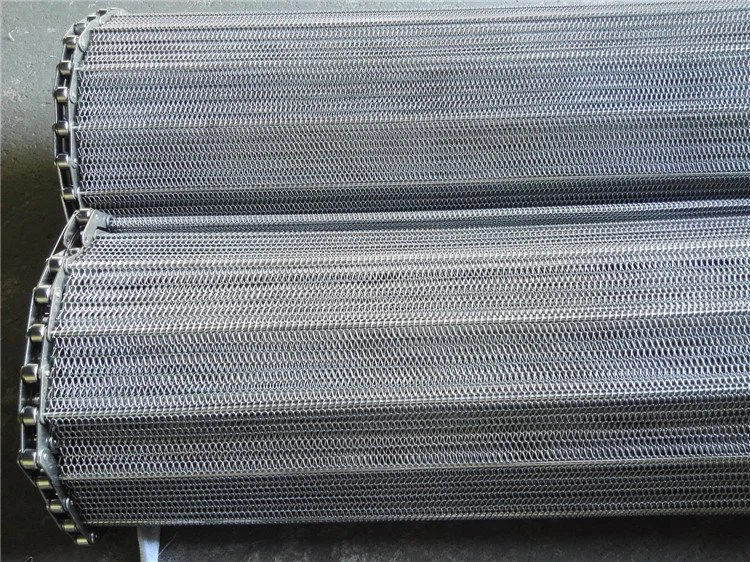

- Mesh Size: Mesh size refers to the number of openings per linear inch in the mesh. A smaller mesh size means more openings per inch and a finer mesh, which is suitable for applications where small particles need to be conveyed or filtered. Conversely, a larger mesh size is used for applications that require high permeability or the handling of larger objects. The accuracy of the mesh size is an important quality indicator. Deviations from the specified mesh size can affect the belt's functionality.
- Weaving Pattern: There are several common weaving patterns for metal wire mesh belts, such as plain weave, twill weave, and Dutch weave. Each pattern has its own characteristics. For example, plain weave is simple and has good flatness, while twill weave provides better flexibility and strength. The quality of the weaving can be evaluated by checking for uniform weaving, no loose wires, and proper interlacing of the wires. Any irregularities in the weaving pattern can lead to premature wear or failure of the belt.
- Wire Diameter and Tensile Strength: The diameter of the wire used in the mesh belt affects its strength, flexibility, and load - bearing capacity. Thicker wires generally provide higher strength but may reduce the belt's flexibility. The tensile strength of the wire is also a crucial factor. It measures the maximum amount of tensile stress that the wire can withstand before breaking. A higher tensile strength indicates a more durable wire.
Surface Finish
The surface finish of a metal wire mesh belt can have a significant impact on its performance, especially in applications where cleanliness and smoothness are required.
- Smoothness: A smooth surface finish reduces friction between the belt and the conveyed materials, which can improve the efficiency of the conveying process and reduce wear on both the belt and the materials. Rough surfaces can cause damage to delicate products or lead to the accumulation of debris, which may affect the belt's operation.
- Corrosion Resistance: A good surface treatment can enhance the belt's corrosion resistance. For example, electroplating or passivation can form a protective layer on the surface of the metal, preventing corrosion and extending the belt's service life. When inspecting the surface finish, look for any signs of rust, pitting, or uneven coating.
Dimensional Accuracy
Accurate dimensions are crucial for the proper installation and operation of metal wire mesh belts.
- Width and Length: The width and length of the belt should conform to the specified dimensions. Any significant deviations can cause problems during installation or result in poor alignment in the conveyor system. For example, if the belt is too wide, it may not fit properly in the conveyor frame, while an overly short belt can lead to slack and inefficient operation.
- Thickness: The thickness of the belt affects its strength and load - carrying capacity. Consistent thickness throughout the belt is important to ensure uniform performance. Deviations in thickness can cause uneven stress distribution and premature wear.
Performance Testing
In addition to visual inspection and material analysis, performance testing is an important way to measure the quality of metal wire mesh belts.
- Load - Bearing Test: This test measures the maximum load that the belt can carry without deformation or failure. By applying a gradually increasing load to the belt and monitoring its performance, we can determine its load - bearing capacity. This is especially important in applications where heavy objects need to be conveyed.
- Abrasion Resistance Test: Abrasion resistance is a key factor in the durability of metal wire mesh belts. The abrasion resistance test involves subjecting the belt to a rubbing or scraping action to simulate the wear it may experience during normal operation. The less the belt wears during the test, the better its abrasion resistance.
- Flexibility Test: Flexibility is important for belts that need to bend around pulleys or rollers. A flexibility test measures the ease with which the belt can be bent without breaking or deforming. A more flexible belt is generally more suitable for applications with complex conveyor layouts.
As a Metal Wire Mesh Belt supplier, we are committed to providing high - quality products that meet the diverse needs of our customers. Our Metal Wire Mesh Belt is available in a variety of materials, mesh sizes, and weaving patterns to suit different applications. We also offer Spiral Conveyor Belt and High Temperature Mesh Belt for specialized applications.
If you are interested in our products or have any questions about measuring the quality of metal wire mesh belts, please feel free to contact us for further discussion and procurement negotiation. We are always ready to provide you with professional advice and solutions.
References
- ASM Handbook Committee. (2004). ASM Handbook, Volume 1: Properties and Selection: Irons, Steels, and High - Performance Alloys. ASM International.
- ASTM International. (2019). ASTM Standards on Steel, Stainless Steel, and Related Alloys. ASTM International.
- Kalpakjian, S., & Schmid, S. R. (2014). Manufacturing Engineering and Technology. Pearson.


