


Alright, folks! As a mesh belt supplier, I've been in the thick of the industry for quite some time, and I often get asked about what makes the cost of a mesh belt go up or down. So, I thought I'd sit down and share some insights on the factors that affect the cost of a mesh belt.
Material Quality
One of the most significant factors influencing the cost of a mesh belt is the material it's made from. We offer different types of mesh belts, like the Stainless Steel Mesh Belt. Stainless steel is a popular choice because it's corrosion - resistant, strong, and can withstand high temperatures. High - grade stainless steel with better alloy compositions, like 316L, is more expensive than lower - grade 201 stainless steel. It offers superior durability and resistance to harsh chemicals, which makes it suitable for industries such as food processing, chemical manufacturing, and pharmaceuticals.
On the other hand, if we're talking about basic carbon steel mesh belts, they're usually more affordable. But they're prone to rusting, so they're mainly used in less demanding environments where the risk of corrosion is low.
Mesh Design and Pattern
The design and pattern of the mesh also play a big role in determining the cost. A simple, standard mesh pattern is generally cheaper to produce. For instance, a plain weave mesh is one of the most basic and cost - effective designs. It has a straightforward criss - cross pattern where the warp and weft wires cross over each other alternately.
However, more complex mesh patterns like the twill weave or Dutch weave are more expensive. These patterns require more intricate manufacturing processes and precise machinery. The twill weave, for example, has a diagonal pattern that gives it better stability and strength compared to the plain weave. And the Dutch weave, with its fine mesh and high filtration capabilities, is commonly used in applications like filtration and screening.
Belt Width and Length
The size of the mesh belt, namely its width and length, directly impacts the cost. Logically, a wider and longer mesh belt requires more material to produce. If you need a custom - sized Spiral Conveyor Belt that's extra wide or long, it's going to cost you more.
Manufacturing a larger belt also takes more time and resources. There are more chances of errors during the production process, and additional quality control measures may be needed to ensure the belt meets the required standards. So, the cost of labor and quality assurance also adds up.
Manufacturing Process
The way the mesh belt is manufactured is another cost - determining factor. Some belts are made using traditional weaving methods, which are more labor - intensive. These methods require skilled workers to operate the looms and ensure the quality of the mesh.
On the other hand, there are modern manufacturing techniques like laser cutting and welding. While these methods can be more precise and efficient, the equipment needed for them is expensive. The initial investment in the machinery, along with the cost of maintenance and operation, is factored into the price of the mesh belt.
Surface Treatment
Surface treatments can enhance the performance and longevity of a mesh belt, but they also increase the cost. For example, a mesh belt that's going to be used in a food - processing environment may need to be passivated. Passivation is a chemical treatment that removes free iron from the surface of stainless steel, making it more resistant to corrosion and ensuring it meets food safety standards.

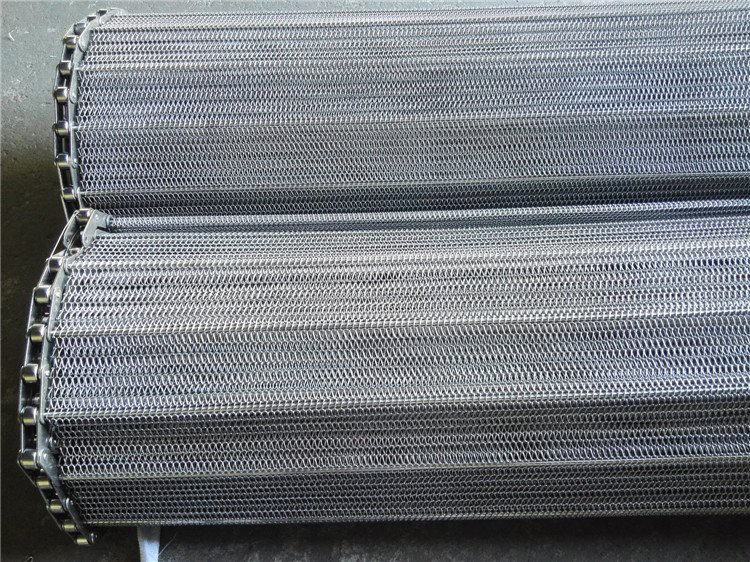
Another common surface treatment is galvanizing. Galvanized mesh belts have a zinc coating that protects them from rust and corrosion. The process of applying the galvanizing layer, whether it's hot - dip galvanizing or electro - galvanizing, adds to the overall cost of the belt.
Quantity Ordered
The quantity of mesh belts you order can have a significant impact on the unit cost. If you're placing a large - scale order, say for a big industrial project, you can usually get a better price per belt. This is because suppliers can take advantage of economies of scale.
When producing a large number of belts, the cost of raw materials can be negotiated at a lower rate. The fixed costs of production, such as setting up the manufacturing equipment, are spread over a larger number of units. So, the more belts you order, the lower the cost per belt is likely to be.
Industry Standards and Certifications
If your application requires the mesh belt to meet certain industry standards or certifications, it can increase the cost. For example, Food Mesh Belt used in the food industry need to comply with strict hygiene and safety standards, such as FDA (Food and Drug Administration) regulations.
Meeting these standards involves additional testing, quality control measures, and documentation. The supplier has to invest in ensuring that the belt is safe for food contact, which includes using food - grade materials and proper manufacturing processes. All these efforts add to the cost of the belt.
Market Conditions
The overall market conditions also affect the cost of mesh belts. Fluctuations in the price of raw materials, such as steel and other metals, can have a direct impact. If the price of steel goes up due to factors like increased demand, supply shortages, or changes in trade policies, the cost of manufacturing mesh belts will increase.
Competition in the market also plays a role. In a highly competitive market, suppliers may offer more competitive prices to attract customers. On the other hand, if there are only a few suppliers in the market, the prices may be higher.
Customization Requirements
If you need a mesh belt with specific customization, like special holes, attachments, or a unique shape, it will cost more. Customization requires additional design work, tooling, and manufacturing processes.
For example, if you need a mesh belt with custom - sized holes for a specific filtration application, the supplier has to develop a new manufacturing process or modify existing equipment. This not only increases the production cost but also the time required to deliver the product.
So, there you have it, folks! These are the main factors that affect the cost of a mesh belt. If you're in the market for a mesh belt and want to discuss your specific needs, feel free to reach out. We're always happy to help you find the right mesh belt at a reasonable price.
References
- Industry reports on mesh belt manufacturing
- Technical literature on materials used in mesh belts
- Market analysis on raw material price trends


