


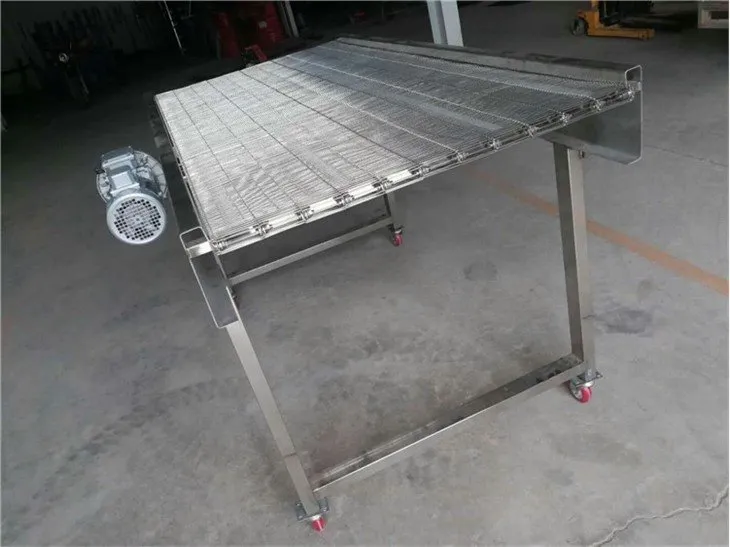
Selecting the right conveyor guard for a food conveyor wire belt is crucial for ensuring food safety, protecting workers, and maintaining the efficiency of your food production line. As a supplier of Food Conveyor Wire Belt, I've seen firsthand the impact that the right conveyor guard can have. In this blog, I'll share some tips on how to make the right choice.
Understanding the Importance of Conveyor Guards in the Food Industry
First off, let's talk about why conveyor guards are so important in the food industry. Food safety is the top priority. Conveyor guards prevent foreign objects from falling onto the Food Conveyor Wire Belt, which could contaminate the food products. They also protect the belt from damage, which can lead to costly repairs and downtime.
On top of that, conveyor guards are essential for worker safety. Moving conveyor belts can be dangerous, and guards help prevent accidents such as entanglement, pinching, and crushing. By installing the right guards, you're creating a safer work environment for your employees.
Factors to Consider When Selecting a Conveyor Guard
Material
The material of the conveyor guard is a critical factor. In the food industry, you need a material that is durable, easy to clean, and resistant to corrosion. Stainless steel is a popular choice because it meets all these requirements. It's strong enough to withstand the rigors of a food production environment, and it can be easily sanitized to prevent the growth of bacteria. Our Stainless Steel Flat Flex Belt is often paired with stainless steel guards for optimal performance.
Another option is high - density polyethylene (HDPE). HDPE is lightweight, non - toxic, and resistant to chemicals. It's also relatively inexpensive, making it a cost - effective choice for some applications. However, it may not be as durable as stainless steel in high - stress environments.
Design
The design of the conveyor guard should be tailored to the specific needs of your food conveyor wire belt. For example, if you're dealing with small food items, you'll need a guard with small openings to prevent the items from falling through. On the other hand, if you're transporting large items, a guard with larger openings may be sufficient.
Accessibility is also an important design consideration. You need to be able to easily access the conveyor belt for cleaning, maintenance, and inspection. Look for guards that can be easily removed or opened without the need for special tools.
Compliance
Compliance with industry standards is non - negotiable. In the food industry, conveyor guards must meet certain safety and hygiene standards. For example, in the United States, the Food and Drug Administration (FDA) has strict regulations regarding food contact surfaces. Your conveyor guard must be made from materials that are approved for food contact and must be designed to prevent contamination.
In addition to FDA regulations, you may also need to comply with other standards such as OSHA (Occupational Safety and Health Administration) requirements for worker safety. Make sure the conveyor guard you choose meets all relevant standards.
Types of Conveyor Guards
Fixed Guards
Fixed guards are permanently attached to the conveyor frame. They provide a high level of protection and are ideal for areas where there is little need for frequent access to the conveyor belt. Fixed guards are often made of stainless steel or other rigid materials.
Adjustable Guards
Adjustable guards can be moved or repositioned as needed. This type of guard is useful in situations where the conveyor belt configuration may change over time or where you need to access different parts of the belt for maintenance. Adjustable guards are typically made of flexible materials such as HDPE or mesh.
Interlocked Guards
Interlocked guards are equipped with safety switches that stop the conveyor belt when the guard is opened. This provides an extra layer of protection for workers. Interlocked guards are commonly used in areas where there is a high risk of accidents.
Installation and Maintenance
Once you've selected the right conveyor guard, proper installation is crucial. Make sure the guard is installed according to the manufacturer's instructions. Incorrect installation can compromise the effectiveness of the guard and put workers at risk.
Regular maintenance is also essential to keep the conveyor guard in good working condition. Clean the guard regularly to prevent the buildup of dirt, debris, and bacteria. Inspect the guard for any signs of damage, such as cracks or loose parts, and replace any damaged components immediately.
Matching Conveyor Guards with Different Food Conveyor Wire Belts
Different types of food conveyor wire belts may require different types of guards. For example, our Flat Flex Food Belt is a popular choice for many food applications. It has a flat, smooth surface that is ideal for transporting food items. When using a flat flex food belt, you may need a guard that can be easily adjusted to fit the width of the belt and that provides a tight seal to prevent food from falling off the sides.
If you're using a wire mesh belt, you'll need a guard that can accommodate the open structure of the belt. The guard should be designed to prevent small food particles from getting caught in the mesh while still allowing for proper ventilation and cleaning.
Conclusion
Selecting the right conveyor guard for your food conveyor wire belt is a complex decision that requires careful consideration of several factors. By choosing the right material, design, and type of guard, and by ensuring proper installation and maintenance, you can improve food safety, protect your workers, and enhance the efficiency of your food production line.
If you're in the market for a Food Conveyor Wire Belt or need help selecting the right conveyor guard, I'd love to assist you. Don't hesitate to reach out for a consultation. We can work together to find the best solution for your specific needs.

References
- Food and Drug Administration (FDA) regulations on food contact surfaces.
- Occupational Safety and Health Administration (OSHA) standards for conveyor safety.


