


As a supplier of Spiral Conveyor Belts, I am often asked about the mechanics behind how these ingenious pieces of equipment transport materials efficiently. In this blog, I'll delve into the science and engineering principles that make spiral conveyor belts such a popular choice in various industries.
Basic Structure of Spiral Conveyor Belts
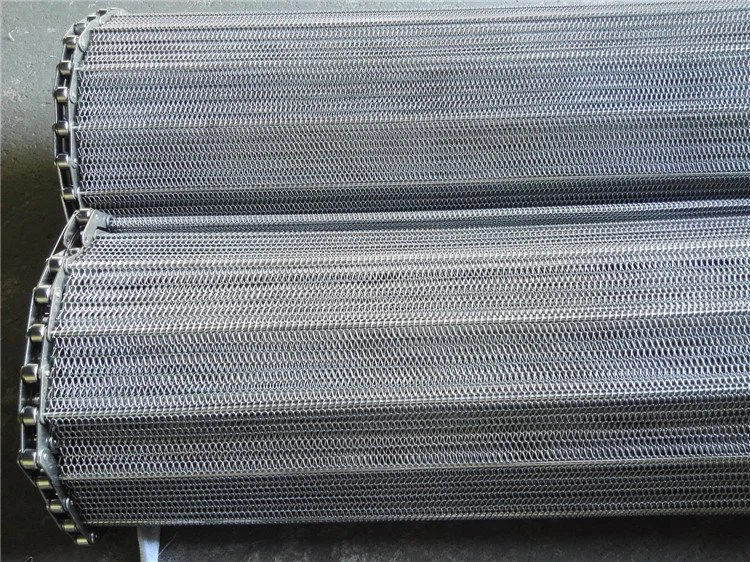
A spiral conveyor belt is a continuous loop of belt material wound in a spiral shape around a central axis. This design allows it to move materials vertically or horizontally in a compact space, making it ideal for facilities with limited floor area. The belt itself can be made from a variety of materials, including rubber, plastic, and Metal Wire Mesh Belt. Each material has its own set of properties that make it suitable for different applications.
The central axis of the spiral conveyor is typically a shaft or a series of rollers that support the belt and provide the necessary tension to keep it in place. The belt is guided along the spiral path by a series of guide rails or rollers, which ensure that it moves smoothly and without deviation.
Forces at Play in Material Transport
When it comes to transporting materials, several forces come into play. The primary force responsible for moving the materials along the belt is the frictional force between the belt and the materials. This frictional force is determined by several factors, including the surface texture of the belt, the weight and shape of the materials, and the speed of the belt.
To ensure that the materials are transported smoothly and efficiently, it's important to choose a belt with the right surface texture. For example, a belt with a rough surface will provide more friction, which is ideal for transporting heavy or irregularly shaped materials. On the other hand, a belt with a smooth surface may be more suitable for transporting lightweight or delicate materials.
In addition to the frictional force, gravity also plays a role in material transport. When the spiral conveyor is used to transport materials vertically, gravity helps to move the materials downward, while the frictional force between the belt and the materials helps to prevent them from sliding back. When the conveyor is used to transport materials horizontally, gravity has a minimal effect, and the frictional force is the primary force responsible for moving the materials.
Advantages of Spiral Conveyor Belts
One of the main advantages of spiral conveyor belts is their ability to transport materials in a compact space. Unlike traditional conveyor belts, which require a large amount of floor area, spiral conveyor belts can be installed in a relatively small footprint, making them ideal for facilities with limited space.
Another advantage of spiral conveyor belts is their flexibility. They can be designed to transport materials at different angles and speeds, making them suitable for a wide range of applications. For example, they can be used to transport materials vertically between different levels of a building, or horizontally around obstacles.
Spiral conveyor belts are also highly efficient. They can transport materials continuously, without the need for frequent stops and starts, which helps to improve productivity and reduce downtime. Additionally, they can be easily integrated into existing production lines, making them a cost-effective solution for many industries.
Applications of Spiral Conveyor Belts
Spiral conveyor belts are used in a wide range of industries, including food processing, pharmaceuticals, automotive, and manufacturing. In the food processing industry, they are commonly used to transport food products between different stages of the production process, such as from the mixing area to the packaging area. They are also used to cool or heat food products, as they can be designed to pass through temperature-controlled zones.
In the pharmaceutical industry, spiral conveyor belts are used to transport pharmaceutical products, such as tablets and capsules, between different processing steps. They are also used to clean and sterilize pharmaceutical equipment, as they can be designed to pass through cleaning and sterilization chambers.
In the automotive industry, spiral conveyor belts are used to transport automotive parts between different assembly stations. They are also used to paint and coat automotive parts, as they can be designed to pass through painting and coating booths.
In the manufacturing industry, spiral conveyor belts are used to transport raw materials, finished products, and waste materials between different areas of the factory. They are also used to automate the production process, as they can be integrated with other equipment, such as robots and sensors.
Maintenance and Safety Considerations
Like any piece of equipment, spiral conveyor belts require regular maintenance to ensure their optimal performance and longevity. This includes cleaning the belt regularly to remove any debris or contaminants, checking the tension of the belt to ensure that it is within the recommended range, and inspecting the guide rails and rollers for any signs of wear or damage.
In addition to regular maintenance, it's also important to follow proper safety procedures when operating a spiral conveyor belt. This includes wearing appropriate personal protective equipment, such as safety glasses and gloves, and ensuring that the conveyor is properly guarded to prevent accidental contact with moving parts.
Choosing the Right Spiral Conveyor Belt
When choosing a spiral conveyor belt for your application, it's important to consider several factors, including the type of materials you need to transport, the distance and height you need to transport them, the speed and capacity requirements of your production line, and the environmental conditions in which the conveyor will be operating.
For example, if you need to transport heavy or abrasive materials, you may want to choose a belt made from a durable material, such as High Temperature Mesh Belt. If you need to transport materials in a high-temperature environment, you may want to choose a belt that is resistant to heat and can withstand high temperatures.
It's also important to choose a belt that is compatible with your existing equipment and production line. This includes ensuring that the belt has the right width, length, and pitch, and that it can be easily integrated with your existing conveyor system.
Conclusion
Spiral conveyor belts are a versatile and efficient solution for transporting materials in a variety of industries. Their unique design allows them to transport materials vertically or horizontally in a compact space, making them ideal for facilities with limited floor area. By understanding the forces at play in material transport, the advantages and applications of spiral conveyor belts, and the maintenance and safety considerations, you can choose the right belt for your application and ensure its optimal performance and longevity.

If you're interested in learning more about our Spiral Conveyor Belt products or have any questions about how they can benefit your business, please don't hesitate to contact us. We'd be happy to discuss your specific requirements and provide you with a customized solution.
References
- "Conveyor Belt Handbook" by Conveyor Equipment Manufacturers Association
- "Industrial Conveying Technology" by Klaus Hettler
- "Material Handling Handbook" by Arthur M. Gudehus


