


Hey there! As a mesh belt supplier, I'm super stoked to spill the beans on how these nifty mesh belts work. Mesh belts are pretty much everywhere – from food processing plants to industrial manufacturing setups. They're like the unsung heroes of the conveyor world, quietly getting the job done day in and day out.
So, what exactly is a mesh belt? Well, it's a type of conveyor belt made up of interlocking wires or metal strips that form a mesh-like pattern. This design gives the belt a whole bunch of cool properties that make it ideal for a wide range of applications.
Let's start with the basics of how a mesh belt moves. At the heart of every mesh belt system is a set of pulleys. These pulleys are like the wheels of a car, but instead of making a vehicle move, they make the mesh belt go round and round. One pulley, usually called the drive pulley, is connected to a motor. When the motor starts up, it spins the drive pulley, and that spinning action pulls the mesh belt along.
The other pulley, known as the idler pulley, doesn't have a motor attached to it. Its main job is to support the belt and keep it in place. It's like a helper that makes sure the belt doesn't go all wobbly or fall off track.
Now, you might be wondering how the items on the mesh belt actually move forward. Well, it's all about friction. The surface of the mesh belt has a certain amount of grip, which allows it to grab onto the things that are placed on it. When the belt moves, the friction between the belt and the items makes them move along with it. It's kind of like when you're pushing a book across a table – the table's surface provides enough friction to make the book slide forward.
One of the really cool things about mesh belts is their open structure. Unlike solid conveyor belts, mesh belts have lots of holes and gaps. This is a game-changer in many industries. For example, in the food industry, the open design allows for better air circulation. This is crucial when you're baking or drying food products. The air can flow through the holes in the belt, which helps to cook or dry the food more evenly.
If you're in the market for a mesh belt for food applications, you might want to check out our Food Mesh Belt. It's specially designed to meet the strict hygiene and safety standards of the food industry.
Another advantage of the open structure is that it allows for easy cleaning. In a food processing plant, cleanliness is of the utmost importance. With a mesh belt, you can simply spray water or cleaning agents through the holes, and it'll wash away all the dirt and debris. This makes maintenance a whole lot easier compared to solid belts.
In industrial settings, the open design of mesh belts is also useful for processes like heat treatment. The holes in the belt allow heat to penetrate evenly, which is essential for treating metals or other materials. It ensures that the entire item gets the right amount of heat, resulting in a more consistent and high-quality product.
Now, let's talk about some of the different types of mesh belts. One popular type is the spiral conveyor belt. Spiral conveyor belts are like a continuous loop that twists and turns in a spiral shape. They're great for saving space because they can move items vertically or horizontally in a compact area.
Our Spiral Conveyor Belt is a top-of-the-line option for those looking for a space-saving solution. It's designed to be durable and efficient, so you can rely on it to keep your production line running smoothly.
If you're in the food industry and need a spiral conveyor belt for handling food products, we've got you covered with our Spiral Food Conveyor Belt. It's made from food-grade materials and is designed to meet the unique requirements of food processing.
Mesh belts can be made from different materials, depending on the application. The most common materials are stainless steel, carbon steel, and plastic. Stainless steel is a popular choice because it's corrosion-resistant, strong, and easy to clean. It's ideal for applications where hygiene is a concern, like in the food and pharmaceutical industries.

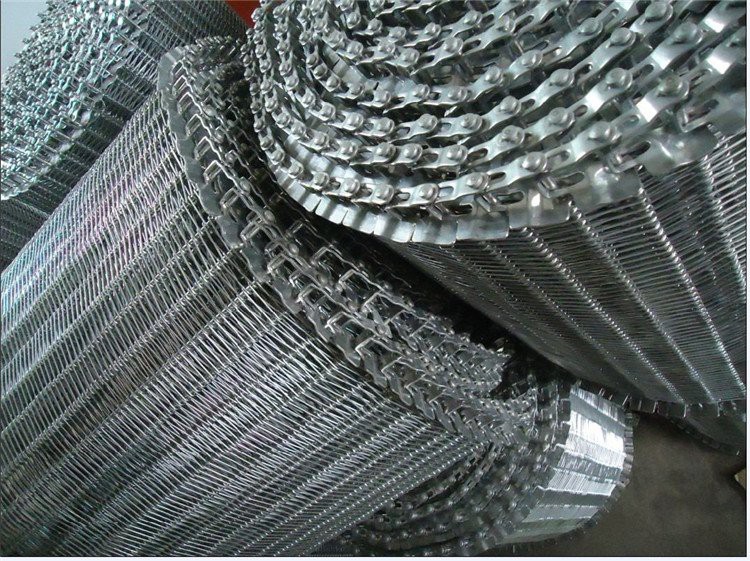
Carbon steel is another option. It's strong and relatively inexpensive, but it's more prone to rusting compared to stainless steel. So, it's usually used in applications where corrosion isn't a major issue, like in some industrial manufacturing processes.
Plastic mesh belts are lightweight and flexible. They're often used in applications where noise reduction is important, or where the items being transported are delicate.
In terms of maintenance, mesh belts are generally pretty easy to take care of. As I mentioned earlier, the open design makes cleaning a breeze. You just need to make sure to clean the belt regularly to prevent the buildup of dirt and debris.
It's also important to check the tension of the belt from time to time. If the belt is too loose, it might slip off the pulleys, and if it's too tight, it can put extra stress on the motor and other components. You can adjust the tension by moving the idler pulley.
Well, that's a pretty good overview of how mesh belts work. I hope this blog has given you a better understanding of these amazing conveyor belts. Whether you're in the food industry, manufacturing, or any other field that needs a reliable conveyor solution, a mesh belt could be just what you're looking for.
If you're interested in learning more about our mesh belts or if you have any questions, don't hesitate to reach out. We're here to help you find the perfect mesh belt for your needs. Let's start a conversation and see how we can make your production line more efficient and productive.
References
- Conveyor Belt Handbook: A guide to conveyor belt technology and applications.
- Industrial Conveyor Systems: Principles and Practices.


