


In the dynamic landscape of industrial manufacturing, the rubber industry stands as a cornerstone, producing a vast array of products that are integral to modern life. From automotive tires to industrial seals, rubber products are ubiquitous. As a leading Metal Belt Manufacturer, we often receive inquiries about the suitability of metal conveyor belts in the rubber industry. In this blog post, we will delve into the potential applications, advantages, and considerations of using metal conveyor belts in the rubber manufacturing process.
Understanding the Rubber Manufacturing Process
Before exploring the role of metal conveyor belts, it is essential to understand the rubber manufacturing process. The process typically involves several stages, including mixing, extrusion, calendering, curing, and finishing. Each stage requires precise handling and transportation of the rubber compound or semi - finished products.
Mixing is the first step, where raw rubber, along with various additives such as fillers, plasticizers, and vulcanizing agents, is combined in a mixer. The resulting rubber compound is then extruded through a die to form a continuous shape, such as a tube or a strip. Calendering involves passing the rubber through a series of rollers to create a flat sheet of a specific thickness. Curing is a critical step where the rubber is heated under controlled conditions to cross - link the polymer chains, giving it its final properties. Finally, the finished rubber products undergo finishing operations, such as trimming and inspection.
Potential Applications of Metal Conveyor Belts in the Rubber Industry
Mixing and Extrusion
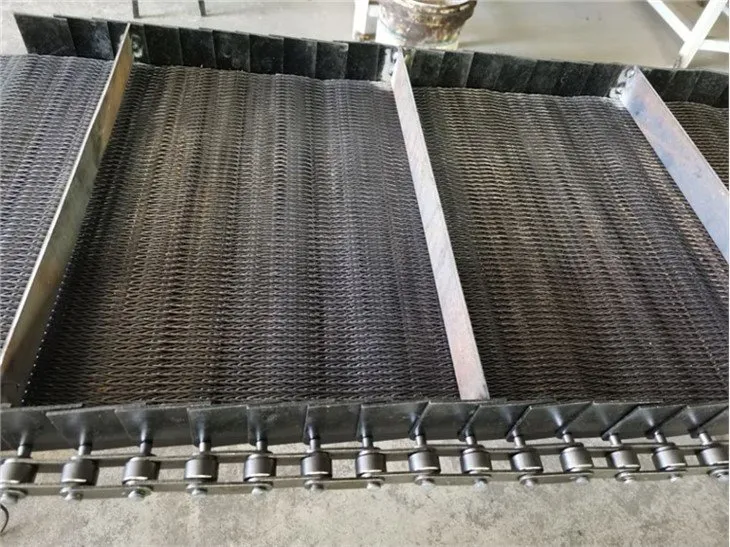
During the mixing process, metal conveyor belts can be used to transport the raw materials to the mixer. Our Metal Wire Conveyor Belt is an ideal choice for this application. Its open mesh design allows for easy cleaning and prevents the accumulation of rubber residues. In the extrusion stage, the conveyor belt can carry the extruded rubber profiles from the extruder to the next processing step. The high - temperature resistance of metal conveyor belts ensures that they can withstand the heat generated during extrusion without deformation.
Calendering
In the calendering process, metal conveyor belts play a crucial role in transporting the rubber sheets between the rollers. The smooth surface of the metal belt ensures that the rubber sheet is evenly spread and has a consistent thickness. Our Double Balanced Mesh Belt provides excellent support and stability, which is essential for high - quality calendering. The balanced mesh structure also allows for efficient heat transfer, which can be beneficial during the cooling or pre - heating stages of the calendering process.
Curing
Curing is a heat - intensive process, and metal conveyor belts are well - suited for this application. They can withstand the high temperatures required for vulcanization without losing their mechanical properties. Metal conveyor belts can transport the rubber products through the curing oven, ensuring uniform heating and curing. The open mesh design of some metal belts allows for better air circulation, which can improve the curing efficiency and quality of the rubber products.
Finishing
In the finishing stage, metal conveyor belts can be used to transport the finished rubber products for inspection, trimming, and packaging. The durability of metal belts ensures that they can handle the weight and volume of the finished products without damage. The smooth surface of the belt also prevents scratching or marking of the rubber products, maintaining their aesthetic appeal.
Advantages of Using Metal Conveyor Belts in the Rubber Industry
Durability
One of the primary advantages of metal conveyor belts is their durability. Rubber manufacturing processes can be harsh, involving high temperatures, chemicals, and mechanical stress. Metal belts are resistant to wear, corrosion, and heat, ensuring a long service life. This reduces the need for frequent belt replacements, resulting in lower maintenance costs and less downtime for the production line.
Precision and Consistency
Metal conveyor belts offer high precision in transporting rubber products. They can maintain a constant speed and tension, ensuring that the rubber products are processed uniformly. This is crucial for achieving consistent product quality, especially in applications where tight tolerances are required, such as in the production of automotive rubber components.
Hygiene and Cleanliness
In the rubber industry, hygiene is an important consideration, especially for products that are used in food or medical applications. Metal conveyor belts are easy to clean and sanitize. Their smooth surface and open mesh design prevent the accumulation of rubber residues, bacteria, and other contaminants. This helps to maintain a clean production environment and ensures the quality and safety of the rubber products.
Customization
As a Metal Belt Manufacturer, we understand that different rubber manufacturing processes have different requirements. Metal conveyor belts can be customized to meet specific needs, such as belt width, length, mesh size, and surface finish. This allows for seamless integration into existing production lines and optimization of the manufacturing process.

Considerations When Using Metal Conveyor Belts in the Rubber Industry
Compatibility with Rubber
It is important to ensure that the metal conveyor belt is compatible with the rubber compound being processed. Some rubber compounds may react with certain metals, leading to corrosion or degradation of the belt. Therefore, it is necessary to select the appropriate metal alloy for the belt based on the type of rubber and the chemicals used in the manufacturing process.
Noise and Vibration
Metal conveyor belts can generate noise and vibration during operation. This can be a concern in a production environment, especially if it affects the working conditions or the quality of the rubber products. Proper installation and the use of vibration - dampening materials can help to reduce noise and vibration levels.
Cost
Compared to some other types of conveyor belts, metal conveyor belts can be more expensive upfront. However, considering their long service life, low maintenance requirements, and the potential for improving product quality, the total cost of ownership over the long term can be competitive.
Conclusion
In conclusion, metal conveyor belts have significant potential in the rubber industry. Their durability, precision, hygiene, and customization capabilities make them suitable for various stages of the rubber manufacturing process, from mixing to finishing. While there are some considerations to keep in mind, such as compatibility with rubber, noise and vibration, and cost, the benefits of using metal conveyor belts far outweigh the challenges.
If you are in the rubber industry and are looking for a reliable conveyor belt solution, we invite you to contact us for a detailed discussion. Our team of experts can help you select the most suitable metal conveyor belt for your specific application and provide you with professional advice on installation, maintenance, and operation. Let us work together to optimize your rubber manufacturing process and improve the quality and efficiency of your production.
References
- Smith, J. (2018). Conveyor Belt Technology in Industrial Manufacturing. Industrial Press.
- Johnson, A. (2019). Rubber Manufacturing Processes and Equipment. Rubber World Publications.


