


Hey there! As a supplier of Ladder Mesh Belts, I often get asked this question: "Can a Ladder Mesh Belt resist corrosion?" Well, let's dive right into it and find out.
First off, let's understand what a Ladder Mesh Belt is. It's a type of conveyor belt made up of a series of cross rods connected by parallel wires, looking a bit like a ladder - hence the name. These belts are used in a wide range of industries, from food processing to automotive manufacturing. They're great for moving all sorts of stuff, like small parts, food items, and even heavy materials.
Now, corrosion. It's the enemy of many industrial components. Corrosion happens when metals react with their environment, usually oxygen and water. This can lead to rust, pitting, and eventually, the failure of the component. So, can a Ladder Mesh Belt stand up to this threat?

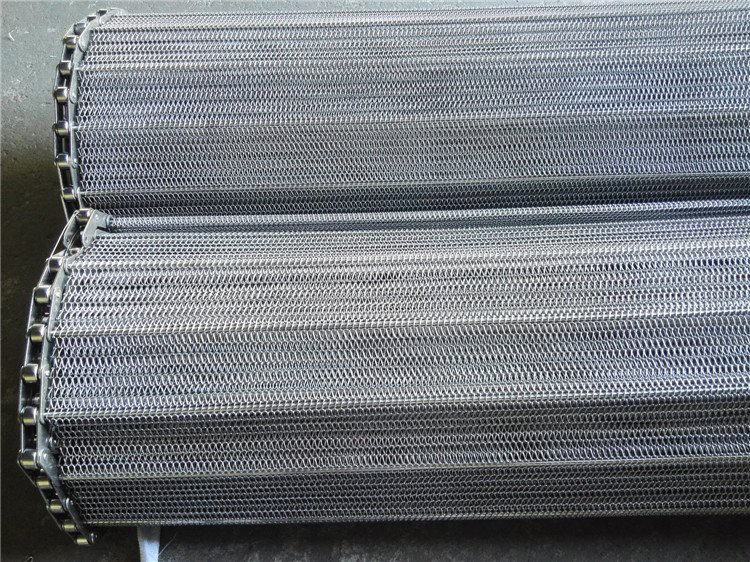
The answer is: it depends. A lot of factors come into play when it comes to a Ladder Mesh Belt's ability to resist corrosion. The first and most important one is the material it's made of.
Material Matters
We usually make Ladder Mesh Belts from different metals, and each has its own corrosion - resistance properties.
Stainless Steel
Stainless steel is hands - down one of the most popular choices for Ladder Mesh Belts. It contains chromium, which forms a thin, invisible layer of chromium oxide on the surface of the metal. This layer acts as a shield, preventing oxygen and water from reaching the underlying metal.
There are different grades of stainless steel, though. For example, 304 stainless steel is commonly used in general - purpose applications. It has good corrosion resistance in normal environments, like in dry warehouses or indoor manufacturing facilities. But if you're dealing with a more aggressive environment, say one with high humidity or exposure to chemicals, you might want to go for 316 stainless steel. This grade has molybdenum added to it, which boosts its resistance to pitting and crevice corrosion.
In food processing plants, stainless steel Ladder Mesh Belts are a top pick. They're hygienic, easy to clean, and can withstand the constant exposure to water and mild cleaning agents. You can check out our Food Mesh Belt options for more details on how we use stainless steel to meet the industry's needs.
Carbon Steel
Carbon steel is another material used for Ladder Mesh Belts. It's strong and relatively inexpensive, but it's not as corrosion - resistant as stainless steel. Carbon steel will rust if it's exposed to moisture for a long time. However, we can take steps to protect it.
One common method is to apply a coating. Zinc coating, also known as galvanization, is widely used. The zinc acts as a sacrificial anode, corroding first and protecting the underlying carbon steel. Galvanized carbon steel Ladder Mesh Belts are often used in less corrosive environments, like in some light - duty conveyor systems in warehouses.
Environmental Factors
The environment where the Ladder Mesh Belt is used plays a huge role in its corrosion resistance.
Humidity
High humidity levels can speed up the corrosion process. In areas with a lot of moisture in the air, like near the ocean or in poorly ventilated factories, corrosion is more likely to occur. Even stainless steel belts can be affected over time if the humidity is extreme. That's why proper ventilation and moisture control are crucial in these environments.
Chemical Exposure
If the Ladder Mesh Belt comes into contact with chemicals, it can face serious corrosion problems. For example, in chemical processing plants, where belts might be exposed to acids or alkalis, the wrong material can quickly deteriorate. In such cases, we need to choose a highly corrosion - resistant material or apply special coatings to protect the belt.
Temperature
Temperature can also impact corrosion. High temperatures can accelerate chemical reactions, making corrosion happen faster. On the other hand, very low temperatures can cause some metals to become brittle, which might lead to cracks and then corrosion.
Maintenance and Care
Even the most corrosion - resistant Ladder Mesh Belt needs proper maintenance. Regular cleaning is essential. In food processing, for instance, food residues can trap moisture and cause corrosion. So, cleaning the belt after each use with the right cleaning agents is a must.
Inspection is also important. We should regularly check the belt for signs of corrosion, like rust spots or pitting. If we catch these problems early, we can take steps to prevent further damage, such as replacing a small section of the belt or applying a protective coating.
Real - World Examples
Let's look at some real - world scenarios to see how Ladder Mesh Belts perform in terms of corrosion resistance.
In a food canning factory, a stainless steel Ladder Mesh Belt is used to transport cans through the washing and sterilization processes. The belt is constantly exposed to water and mild detergents. Thanks to the corrosion - resistant properties of stainless steel, the belt lasts for a long time without significant corrosion. It keeps the production line running smoothly, ensuring that the cans are properly processed.
On the other hand, in a construction site where a carbon steel Ladder Mesh Belt is used to move building materials, if the belt is left outside in the rain without proper protection, it will start to rust within a few weeks. This shows how important it is to choose the right material and take appropriate protective measures based on the environment.
Conclusion
So, can a Ladder Mesh Belt resist corrosion? The short answer is yes, but it depends on the material, the environment, and how well it's maintained. We, as a Ladder Mesh Belt supplier, have the knowledge and experience to help you choose the right belt for your specific needs.
Whether you're looking for a Mesh Conveor Belt for a general - purpose conveyor system or a Conveyor Mesh Belt for a specialized application, we've got you covered.
If you're interested in learning more about our Ladder Mesh Belts or have specific requirements for your project, don't hesitate to reach out. We're here to assist you in making the best choice for your corrosion - resistance needs. Let's start a conversation and see how we can work together to keep your conveyor systems running smoothly.
References
- ASM Handbook Volume 13A: Corrosion: Fundamentals, Testing, and Protection
- "Corrosion Resistance of Metals and Alloys" by David A. Jones


