


Hey there! As a supplier of Ladder Mesh Belts, I often get asked some interesting questions from my customers. One question that pops up quite a bit is, "Can a Ladder Mesh Belt be used in a vacuum environment?" Today, I'm gonna dig deep into this topic and share what I've learned over the years in the business.
First off, let's understand what a Ladder Mesh Belt is. It's a type of conveyor belt made up of parallel wires connected by cross rods, looking a bit like a ladder, hence the name. These belts are super versatile and are used in all sorts of industries, from food processing to automotive manufacturing. They're known for their strength, durability, and flexibility, which makes them a popular choice for many applications.
Now, when it comes to using a Ladder Mesh Belt in a vacuum environment, there are several factors we need to consider. One of the main concerns in a vacuum is outgassing. Outgassing is when materials release gases or vapors when placed in a low - pressure environment. In a vacuum, even tiny amounts of outgassing can cause problems. For example, in a semiconductor manufacturing process that takes place in a vacuum chamber, any outgassed particles can contaminate the delicate components being produced.
So, can our Ladder Mesh Belts outgas? Well, it depends on the materials they're made of. Most of the Ladder Mesh Belts we supply are made from high - quality metals like stainless steel. Stainless steel is a great choice because it has relatively low outgassing properties. It's resistant to corrosion and can withstand high temperatures, which are often requirements in vacuum applications. However, if the belt has been treated with certain coatings or lubricants, these could potentially outgas. That's why we make sure to use only vacuum - compatible coatings and lubricants when necessary.
Another factor is the mechanical performance of the Ladder Mesh Belt in a vacuum. In a vacuum, there's no air to provide cooling or lubrication in the traditional sense. This means that the moving parts of the belt, like the joints between the wires and cross rods, need to be designed to operate smoothly without relying on air - based lubrication. Our Ladder Mesh Belts are engineered with precision to minimize friction between the components. We use special manufacturing techniques to ensure that the joints are tight and that the wires can move freely without excessive wear, even in a vacuum.
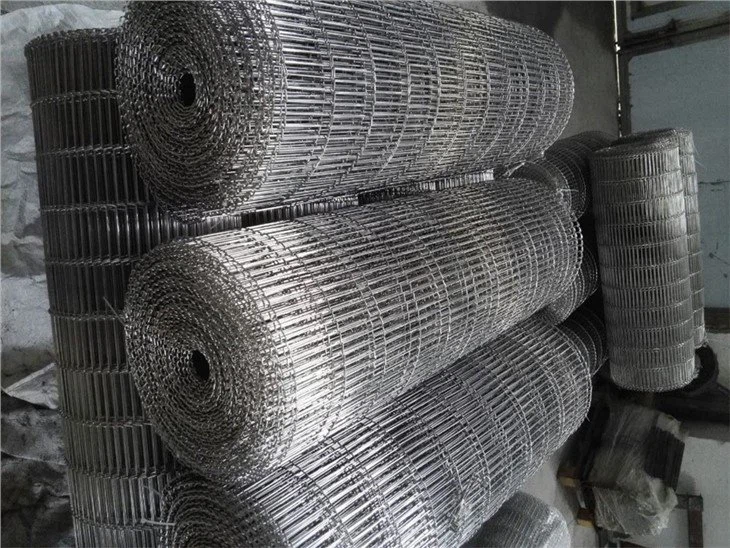

The temperature in a vacuum environment can also vary widely. Some vacuum processes, like space simulation chambers, can experience extremely low temperatures, while others, like vacuum furnaces, can reach very high temperatures. Our Ladder Mesh Belts are designed to handle these temperature extremes. Stainless steel has a wide temperature range of operation, and we can customize the belts to suit specific temperature requirements. For example, in a high - temperature vacuum application, we might use a special grade of stainless steel that can maintain its strength and flexibility at elevated temperatures.
Now, let's talk about the advantages of using a Ladder Mesh Belt in a vacuum environment. One of the biggest advantages is its open - mesh design. In a vacuum, this open design allows for better evacuation of air and other gases from the chamber. It also provides good visibility, which can be important in applications where operators need to monitor the process inside the vacuum chamber. For instance, in a vacuum drying process, the open mesh allows moisture to escape more easily, speeding up the drying time.
The Ladder Mesh Belt's flexibility is another plus. It can be easily adapted to different conveyor system configurations, even in the confined space of a vacuum chamber. We can customize the width, length, and pitch of the belt to fit the specific needs of our customers' equipment. Whether it's a small - scale research vacuum chamber or a large - scale industrial production line, we can provide a Ladder Mesh Belt that works perfectly.
If you're in the market for a conveyor belt for your vacuum application, you might also be interested in our other types of belts. Check out our Metal Wire Mesh Belt and Spiral Freezer Belt options. They also have unique features that might be suitable for your specific requirements. And of course, our Stainless Steel Mesh Belt is another great choice for vacuum and non - vacuum applications alike.
In conclusion, a Ladder Mesh Belt can definitely be used in a vacuum environment. With the right choice of materials, proper design, and careful manufacturing, it can meet the strict requirements of vacuum processes. Whether you're in the semiconductor, aerospace, or food industry, our Ladder Mesh Belts can provide reliable performance in a vacuum.
If you're considering using a Ladder Mesh Belt in your vacuum application, don't hesitate to reach out to us. We have a team of experts who can help you choose the right belt for your specific needs. We can also provide technical support and advice on installation and maintenance. Let's work together to find the perfect solution for your business.
References:
- "Vacuum Technology Handbook" by O'Hanlon, J.F.
- "Materials Science for Engineers" textbooks for information on metal properties and outgassing.


