


Hey there! As a supplier of Food Mesh Belts, I often get asked about the corrosion resistance of these essential pieces of equipment. So, let's dive right in and talk about what corrosion resistance means for a food mesh belt.
First off, what is corrosion? Corrosion is basically the deterioration of a material, usually a metal, due to a chemical reaction with its environment. In the context of food mesh belts, this environment can be pretty harsh. You've got contact with food products, cleaning agents, and sometimes high - humidity or wet conditions. All these factors can potentially lead to corrosion if the belt isn't up to the task.
Now, why is corrosion resistance so important for a food mesh belt? Well, in the food industry, hygiene is of utmost importance. A corroded belt can contaminate the food products it's carrying. Rust or other corrosion by - products can flake off and end up in the food, which is a huge no - no. It can also affect the functionality of the belt. Corrosion can weaken the structure of the belt, leading to breaks or malfunctions, which can disrupt the production process and cause costly downtime.
There are a few key factors that contribute to the corrosion resistance of a food mesh belt.
Material Selection
The type of material used to make the belt is probably the most important factor. Stainless steel is a popular choice for food mesh belts, and for good reason. It contains chromium, which forms a thin, invisible layer of chromium oxide on the surface of the metal. This layer acts as a protective barrier, preventing oxygen and moisture from reaching the underlying metal and causing corrosion. Different grades of stainless steel have different levels of corrosion resistance. For example, 304 stainless steel is commonly used in food applications because it offers good general corrosion resistance. However, in more aggressive environments, like those with high salt content or exposure to certain acids, 316 stainless steel might be a better choice. 316 stainless steel contains molybdenum, which enhances its resistance to pitting and crevice corrosion.
Surface Finish
The surface finish of the belt also plays a role in its corrosion resistance. A smooth surface is less likely to trap dirt, moisture, and food particles, which can all contribute to corrosion. When a belt has a rough surface, these contaminants can get stuck in the tiny crevices, creating an environment where corrosion can start. So, manufacturers often use processes like polishing or electropolishing to give the belt a smooth finish. This not only improves corrosion resistance but also makes the belt easier to clean, which is another important aspect of food safety.
Coating
Sometimes, a food mesh belt might be coated with a protective layer to enhance its corrosion resistance. There are different types of coatings available. For example, a polymer coating can provide an additional barrier between the metal and the environment. These coatings can be designed to be resistant to chemicals, abrasion, and moisture. However, it's important to choose a coating that is safe for use in food applications. The coating should not release any harmful substances into the food.
Maintenance
Even the most corrosion - resistant belt needs proper maintenance to keep it in good condition. Regular cleaning is essential. Using the right cleaning agents is important too. Harsh chemicals can damage the protective layer on the belt and actually increase the risk of corrosion. So, it's important to follow the manufacturer's recommendations for cleaning. Also, inspecting the belt regularly for signs of corrosion, such as rust spots or discoloration, can help catch problems early. If corrosion is detected, it can be addressed before it spreads and causes more serious damage.
Now, let's talk about how our company ensures the high corrosion resistance of the Food Mesh Belt we supply.
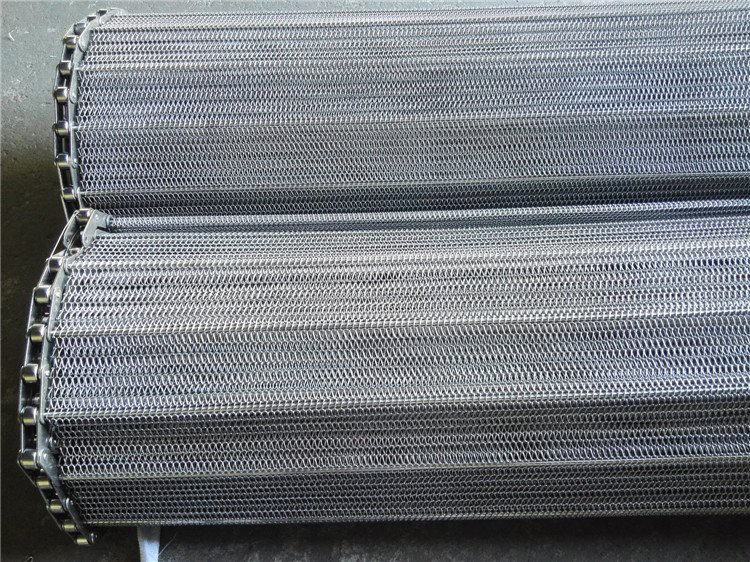

We are very careful about material selection. We only use high - quality stainless steel grades that are specifically chosen for their excellent corrosion resistance in food applications. Our manufacturing process includes advanced surface finishing techniques to give the belts a smooth and uniform surface. This not only improves corrosion resistance but also meets the strict hygiene standards of the food industry.
In addition to that, we offer optional coatings for customers who need extra protection. Our coatings are food - safe and have been tested to ensure they provide long - lasting corrosion resistance. And we don't just stop at manufacturing. We also provide comprehensive maintenance guidelines to our customers. We want to make sure that the belts we supply perform well and last a long time in their food processing facilities.
Our Food Mesh Belt is also suitable for different applications. For example, in the freezing process, our Spiral Freezer Belt is designed to withstand the cold and wet conditions inside a spiral freezer. The corrosion - resistant properties of the belt ensure that it can operate efficiently without getting damaged by the moisture and low temperatures. In a furnace application, our Furnace Mesh Belt is made to resist the high temperatures and any corrosive gases that might be present in the furnace environment.
If you're in the food industry and are looking for a reliable and corrosion - resistant food mesh belt, we'd love to hear from you. Whether you need a belt for a small - scale food production line or a large - scale industrial facility, we can provide you with the right solution. Our team of experts can help you choose the best belt based on your specific requirements, including the type of food products you're processing, the environment in which the belt will operate, and your budget.
Contact us today to start a conversation about your food mesh belt needs. We're ready to work with you to ensure that you get a high - quality, corrosion - resistant belt that meets all your expectations.
References
- Metals Handbook: Corrosion, ASM International
- Stainless Steel in Food Processing, American Iron and Steel Institute
So, that's a quick rundown on the corrosion resistance of a food mesh belt. I hope this information has been helpful to you. If you have any more questions, feel free to reach out!


