


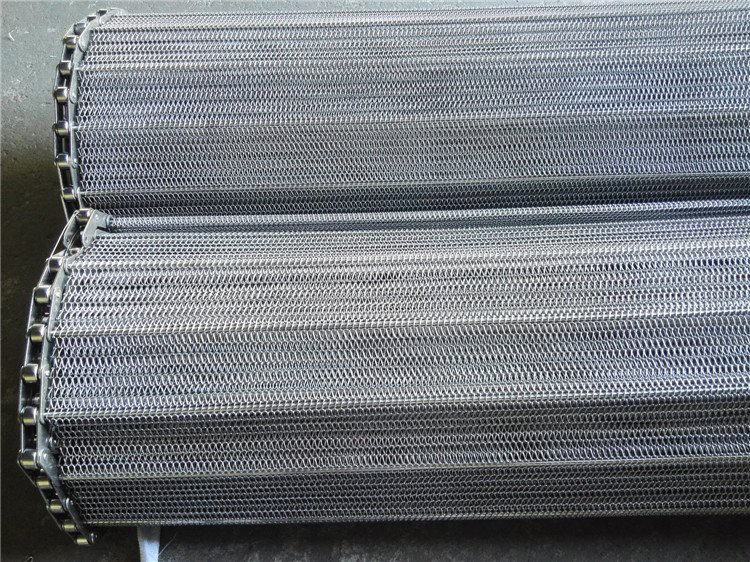
As a dedicated supplier of Metal Wire Mesh Belts, I've witnessed firsthand the significance of understanding every aspect of these versatile products. One crucial characteristic that often comes under scrutiny is the brittleness of metal wire mesh belts. In this blog post, I'll delve into what brittleness means in the context of these belts, its causes, effects, and how to manage it effectively.
Defining Brittleness in Metal Wire Mesh Belts
Brittleness in metal wire mesh belts refers to the tendency of the belt to fracture or break under stress without significant plastic deformation. Unlike ductile materials that can stretch and bend before failing, brittle materials snap suddenly when the applied stress exceeds their strength. This characteristic is a double - edged sword. On one hand, a certain level of stiffness can be beneficial for maintaining the shape and structure of the mesh belt, especially in applications where precision is key. On the other hand, excessive brittleness can lead to premature failure, which is a major concern for both suppliers and end - users.
Causes of Brittleness
Material Composition
The type of metal used in the wire mesh belt plays a fundamental role in determining its brittleness. For instance, some high - carbon steels are inherently more brittle than low - carbon steels. High - carbon steels have a higher carbon content, which forms hard carbide particles. These particles can act as stress concentrators, making the material more prone to cracking. Additionally, the presence of impurities such as sulfur, phosphorus, and nitrogen can also increase brittleness. These elements can form brittle intermetallic compounds or segregate at grain boundaries, weakening the overall structure of the metal.
Heat Treatment
Improper heat treatment can significantly affect the brittleness of metal wire mesh belts. Quenching, a common heat - treatment process, involves rapidly cooling the metal from a high temperature. If the quenching rate is too fast, it can cause the formation of martensite, a hard and brittle phase. Tempering, which is usually done after quenching, is used to reduce the brittleness of martensite. However, if the tempering process is not carried out correctly, the belt may still retain a high level of brittleness.
Cold Working
Cold working, such as drawing or rolling the wire during the manufacturing process, can increase the strength of the metal but also make it more brittle. As the metal is deformed at room temperature, dislocations are introduced into the crystal structure. These dislocations can interact with each other and form barriers to further deformation, increasing the strength of the material. However, if the cold - working percentage is too high, the metal can become over - worked and lose its ductility, leading to brittleness.
Effects of Brittleness on Metal Wire Mesh Belts
Reduced Service Life
One of the most significant effects of brittleness is the reduced service life of the metal wire mesh belt. In industrial applications, these belts are often subjected to continuous stress, including tension, bending, and abrasion. A brittle belt is more likely to develop cracks and fractures under these conditions, leading to premature failure. This not only results in downtime for the production process but also incurs additional costs for replacement and maintenance.

Safety Risks
Brittle belts pose safety risks in the workplace. When a brittle belt breaks suddenly, it can cause flying debris, which can injure workers. In addition, if the belt is used in a conveyor system, the sudden failure can lead to the spillage of materials, potentially causing environmental hazards and damage to equipment.
Impact on Product Quality
In some applications, such as food processing or electronics manufacturing, the brittleness of the wire mesh belt can directly affect product quality. For example, in food processing, a brittle belt may shed small metal particles, which can contaminate the food. In electronics manufacturing, the presence of metal debris from a brittle belt can cause short - circuits in electronic components.
Managing Brittleness
Material Selection
Choosing the right material is the first step in managing brittleness. As a supplier, I always recommend working closely with customers to understand their specific application requirements. For applications where high ductility is needed, low - carbon steels or stainless steels with good corrosion resistance and ductility can be a suitable choice. Additionally, materials with low impurity levels should be selected to minimize the risk of brittleness caused by impurities.
Proper Heat Treatment
Ensuring proper heat treatment is crucial for reducing brittleness. This involves carefully controlling the heating and cooling rates during quenching and tempering processes. Advanced heat - treatment technologies, such as controlled - atmosphere furnaces, can be used to achieve more precise temperature control and prevent the formation of brittle phases.
Optimal Cold Working
Controlling the amount of cold working is also important. By limiting the cold - working percentage, the ductility of the metal can be maintained. This may involve using multiple passes of cold working with intermediate annealing steps to relieve stress and restore ductility.
Applications and Brittleness Considerations
Food Mesh Belt
In the food industry, Food Mesh Belt are widely used for conveying, baking, and freezing food products. Brittleness in these belts can be a major concern due to the strict hygiene and safety requirements. A brittle belt may break and contaminate the food, leading to product recalls and damage to the brand reputation. Therefore, when selecting a food mesh belt, it is essential to choose a material with low brittleness and good corrosion resistance.
Spiral Freezer Belt
Spiral Freezer Belt are used in the freezing process of various food products. These belts are subjected to extreme temperature changes, which can increase the risk of brittleness. To ensure the reliability of spiral freezer belts, materials that can withstand thermal cycling without becoming brittle should be selected. Additionally, proper heat treatment and maintenance are necessary to prevent the development of brittleness over time.
Net Conveyor Belt
Net Conveyor Belt are used in a wide range of industries, including automotive, packaging, and mining. The brittleness of these belts can affect their performance and durability. In high - stress applications, such as heavy - duty conveying, belts with high ductility and low brittleness are required to withstand the continuous loading and unloading.
Conclusion
As a Metal Wire Mesh Belt supplier, I understand the importance of managing brittleness to provide high - quality products to our customers. By understanding the causes and effects of brittleness and implementing appropriate management strategies, we can ensure that our belts meet the diverse needs of different industries. Whether you are in the food processing, electronics, or automotive industry, choosing the right metal wire mesh belt with the appropriate level of brittleness is crucial for the success of your operations.
If you are interested in learning more about our Metal Wire Mesh Belts or have specific requirements for your application, I encourage you to reach out to us. We are committed to providing you with the best solutions and services. Contact us today to start a discussion about your procurement needs.
References
- Callister, W. D., & Rethwisch, D. G. (2017). Materials Science and Engineering: An Introduction. Wiley.
- ASM Handbook Committee. (1990). ASM Handbook Volume 4: Heat Treating. ASM International.
- Dieter, G. E. (1986). Mechanical Metallurgy. McGraw - Hill.


