


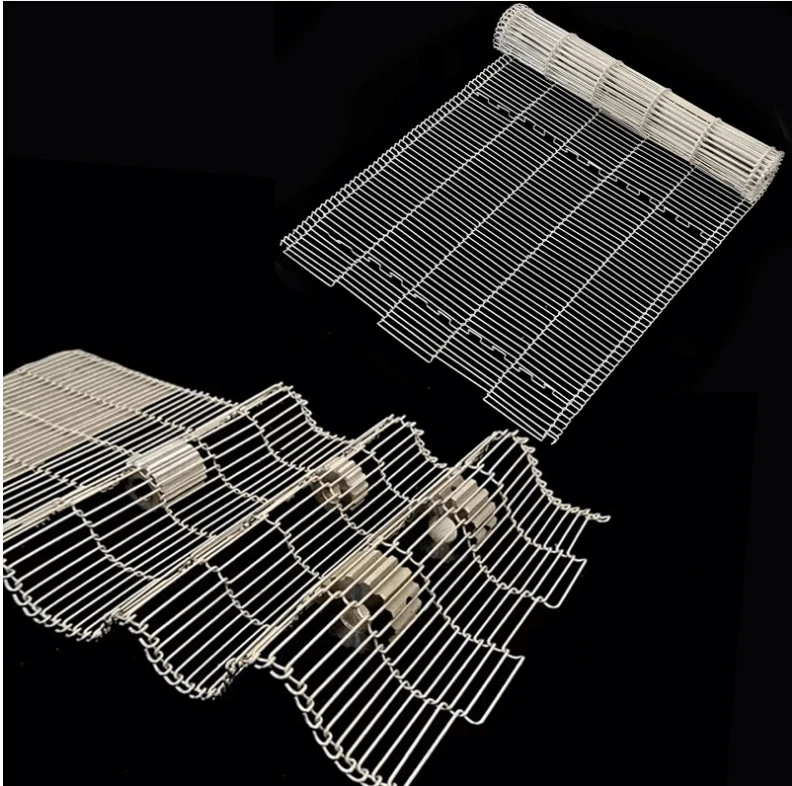
As a supplier of wire mesh belts, I have witnessed firsthand the crucial role these belts play in various industries. Wire mesh belts are widely used in applications such as food processing, automotive manufacturing, electronics production, and more. They offer excellent durability, flexibility, and the ability to handle high temperatures and heavy loads. In this blog post, I will discuss the common materials used for wire mesh belts, their properties, and their suitability for different applications.
Stainless Steel
Stainless steel is one of the most popular materials for wire mesh belts due to its excellent corrosion resistance, high strength, and durability. It is suitable for a wide range of applications, including food processing, chemical processing, and pharmaceutical manufacturing. Stainless steel wire mesh belts can withstand high temperatures and harsh environments, making them ideal for use in ovens, freezers, and other industrial equipment.
There are several types of stainless steel commonly used for wire mesh belts, including 304, 316, and 430. Type 304 stainless steel is the most widely used grade due to its good corrosion resistance and affordability. It contains 18% chromium and 8% nickel, which provides excellent resistance to oxidation and corrosion in most environments. Type 316 stainless steel is more corrosion-resistant than 304, especially in marine and chemical environments. It contains 16% chromium, 10% nickel, and 2% molybdenum, which provides enhanced resistance to pitting and crevice corrosion. Type 430 stainless steel is a ferritic stainless steel that offers good corrosion resistance and high-temperature strength. It is commonly used in applications where magnetic properties are required.
Carbon Steel
Carbon steel is another common material used for wire mesh belts. It is known for its high strength, durability, and affordability. Carbon steel wire mesh belts are suitable for applications that require high tensile strength and resistance to wear and tear. They are commonly used in industries such as mining, construction, and agriculture.
Carbon steel wire mesh belts are typically made from low-carbon steel, which contains less than 0.3% carbon. This type of steel is easy to form and weld, making it ideal for manufacturing wire mesh belts. However, carbon steel is prone to corrosion, especially in humid or corrosive environments. To protect against corrosion, carbon steel wire mesh belts are often coated with a layer of zinc or other protective materials.
Galvanized Steel
Galvanized steel is a type of carbon steel that has been coated with a layer of zinc to protect against corrosion. Galvanized steel wire mesh belts offer excellent corrosion resistance and durability, making them suitable for outdoor and wet environments. They are commonly used in applications such as conveyor systems, drying racks, and filtration systems.
The zinc coating on galvanized steel wire mesh belts provides a sacrificial layer of protection, which means that the zinc will corrode before the underlying steel. This helps to extend the lifespan of the wire mesh belt and reduce the need for maintenance. Galvanized steel wire mesh belts are available in a variety of mesh sizes and configurations to meet the specific needs of different applications.
Aluminum
Aluminum is a lightweight and corrosion-resistant material that is commonly used for wire mesh belts in applications where weight is a concern. Aluminum wire mesh belts are suitable for use in industries such as aerospace, electronics, and food processing. They offer excellent heat transfer properties, which make them ideal for use in ovens and other high-temperature applications.
Aluminum wire mesh belts are typically made from aluminum alloys, which offer a combination of strength, corrosion resistance, and formability. The most common aluminum alloys used for wire mesh belts are 6061 and 5052. Alloy 6061 is a heat-treatable alloy that offers high strength and good corrosion resistance. It is commonly used in applications where high strength and lightweight are required. Alloy 5052 is a non-heat-treatable alloy that offers excellent corrosion resistance and formability. It is commonly used in applications where corrosion resistance and flexibility are important.

Other Materials
In addition to the materials mentioned above, there are several other materials that can be used for wire mesh belts, depending on the specific requirements of the application. These materials include:
- Copper: Copper wire mesh belts are known for their excellent electrical conductivity and corrosion resistance. They are commonly used in applications such as electronics manufacturing and electrical grounding.
- Brass: Brass wire mesh belts offer good corrosion resistance and aesthetic appeal. They are commonly used in applications such as decorative screens and filtration systems.
- Monel: Monel is a nickel-copper alloy that offers excellent corrosion resistance in a wide range of environments, including seawater and acidic solutions. Monel wire mesh belts are commonly used in applications such as marine equipment and chemical processing.
- Titanium: Titanium is a lightweight and corrosion-resistant material that offers high strength and excellent biocompatibility. Titanium wire mesh belts are commonly used in applications such as medical devices and aerospace components.
Choosing the Right Material
When choosing a material for a wire mesh belt, it is important to consider the specific requirements of the application. Factors such as temperature, corrosion resistance, strength, and flexibility should all be taken into account. Here are some general guidelines to help you choose the right material:
- Temperature: If the application involves high temperatures, stainless steel or carbon steel may be the best choice. These materials can withstand high temperatures without losing their strength or shape.
- Corrosion Resistance: If the application involves exposure to corrosive substances, stainless steel, galvanized steel, or aluminum may be the best choice. These materials offer excellent corrosion resistance and can withstand harsh environments.
- Strength: If the application requires high strength, carbon steel or stainless steel may be the best choice. These materials offer high tensile strength and can handle heavy loads.
- Flexibility: If the application requires flexibility, aluminum or stainless steel may be the best choice. These materials offer good flexibility and can be easily formed into different shapes.
Conclusion
In conclusion, wire mesh belts are an essential component in many industries, and the choice of material is crucial to their performance and longevity. Stainless steel, carbon steel, galvanized steel, aluminum, and other materials each have their own unique properties and advantages, and the right material should be chosen based on the specific requirements of the application. As a Wire Mesh Conveyor Belt Suppliers, we offer a wide range of wire mesh belts made from different materials to meet the diverse needs of our customers. Whether you need a Wiremation Conveyor Belting for a food processing application or a Balanced Wire Mesh Belt for an automotive manufacturing process, we have the expertise and experience to provide you with the right solution.
If you are interested in learning more about our wire mesh belts or would like to discuss your specific requirements, please feel free to contact us. Our team of experts will be happy to assist you in choosing the right material and configuration for your application. We look forward to working with you to meet your wire mesh belt needs.
References
- ASM Handbook, Volume 1: Properties and Selection: Irons, Steels, and High-Performance Alloys. ASM International, 1990.
- Metals Handbook, Volume 1: Properties and Selection: Irons, Steels, and High-Performance Alloys. American Society for Metals, 1978.
- Corrosion Resistance of Stainless Steels. Robert W. Staehle, 1995.


