


Hey there! As a supplier of Ladder Mesh Belts, I've seen firsthand how important it is for these belts to be corrosion - resistant. Corrosion can not only shorten the lifespan of the belt but also lead to operational issues and increased maintenance costs. So, today I'm gonna share some tips on how to make a Ladder Mesh Belt more corrosion - resistant.
Choose the Right Material
The first step in making a Ladder Mesh Belt corrosion - resistant is to select the appropriate material. Stainless steel is a popular choice for its excellent corrosion - resistance properties. Among different types of stainless steel, 304 and 316 are commonly used.
304 stainless steel contains about 18% chromium and 8% nickel. It offers good general corrosion resistance and is suitable for many applications. However, in more corrosive environments, such as those with exposure to saltwater or certain chemicals, 316 stainless steel is a better option. 316 stainless steel has an additional 2 - 3% molybdenum, which enhances its resistance to pitting and crevice corrosion.
If you're looking for other options, there are also some specialty alloys available that offer even higher levels of corrosion resistance. But they might come at a higher cost. You can check out our Conveyor Mesh Belt page to see the different material options we offer.
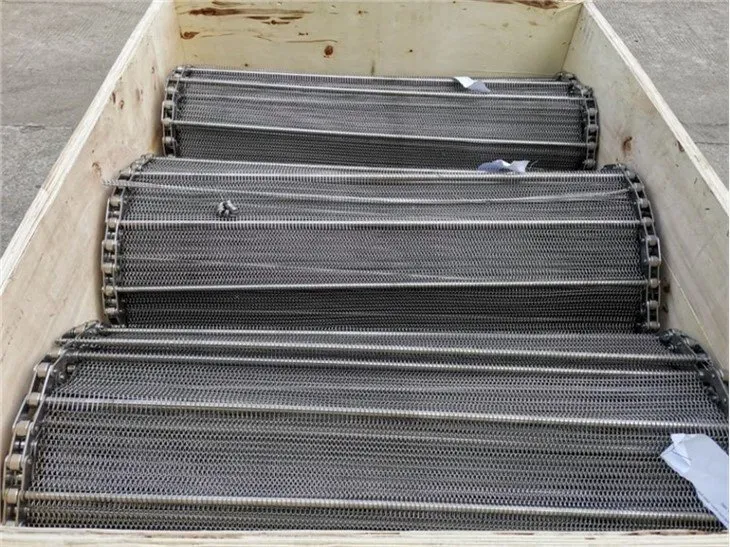

Surface Treatment
Surface treatment is another effective way to improve the corrosion resistance of a Ladder Mesh Belt. One common method is passivation. Passivation is a chemical process that removes free iron from the surface of the stainless steel, forming a thin, protective oxide layer. This layer acts as a barrier, preventing oxygen and other corrosive substances from reaching the underlying metal.
Another surface treatment option is coating. There are various types of coatings available, such as epoxy coatings, ceramic coatings, and PTFE coatings. Epoxy coatings are known for their good adhesion and chemical resistance. Ceramic coatings offer high hardness and excellent wear resistance in addition to corrosion protection. PTFE coatings, on the other hand, provide a low - friction surface, which can also help prevent the build - up of corrosive materials.
We also offer Mesh Conveor Belt products with different surface treatments. You can explore the options to find the one that best suits your needs.
Proper Installation and Maintenance
Even if you choose the right material and apply the appropriate surface treatment, improper installation and maintenance can still lead to corrosion. During installation, make sure the belt is properly tensioned. Over - tensioning can cause stress on the belt, which may lead to cracking and corrosion. Under - tensioning, on the other hand, can result in slippage and uneven wear, also increasing the risk of corrosion.
Regular cleaning is essential for maintaining the corrosion resistance of the Ladder Mesh Belt. Remove any dirt, debris, or corrosive substances from the belt surface as soon as possible. Use mild detergents and non - abrasive cleaning tools to avoid damaging the surface treatment or the material itself.
Inspect the belt regularly for signs of corrosion, such as rust spots, pitting, or discoloration. If you notice any issues, take immediate action to address them. For example, if there are small areas of corrosion, you can use a rust remover or a passivation solution to treat the affected area.
Environmental Control
The environment in which the Ladder Mesh Belt operates plays a crucial role in its corrosion resistance. If the belt is used in a humid environment, try to control the humidity level. High humidity can accelerate the corrosion process, especially if there are other corrosive substances present in the air. You can use dehumidifiers or ventilation systems to reduce the humidity.
In industrial settings where the belt may be exposed to chemicals, make sure to keep the chemical concentration within acceptable limits. Some chemicals can react with the belt material, causing corrosion. If possible, isolate the belt from the source of the chemicals or use protective enclosures.
Our Spiral Freezer Belt products are designed to perform well in different environments. But by following these environmental control tips, you can further enhance their corrosion resistance.
Conclusion
Making a Ladder Mesh Belt more corrosion - resistant involves a combination of choosing the right material, applying appropriate surface treatments, proper installation and maintenance, and environmental control. By taking these steps, you can extend the lifespan of the belt, reduce maintenance costs, and ensure smooth operation.
If you're in the market for a Ladder Mesh Belt or have any questions about corrosion resistance, feel free to reach out to us. We're here to help you find the best solution for your specific needs. Let's start a conversation and see how we can work together to get you the most suitable Ladder Mesh Belt.
References
- Stainless Steel Handbook, ASM International
- Corrosion Engineering: Principles and Practice, Pierre R. Roberge


