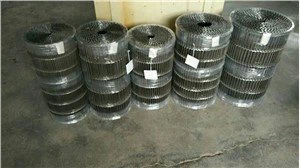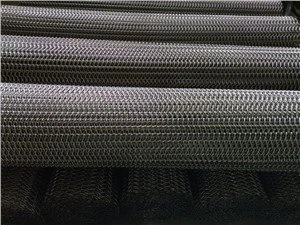

In the dynamic world of industrial applications, the choice of the right conveyor belt is pivotal for ensuring efficiency, reliability, and cost - effectiveness. One type of conveyor belt that has gained significant attention in recent years is the ladder mesh belt. As a leading supplier of ladder mesh belts, I am often asked whether these belts can be used for sorting applications. In this blog post, I will explore this question in detail, examining the characteristics of ladder mesh belts, the requirements of sorting applications, and how well the two align.
Characteristics of Ladder Mesh Belts
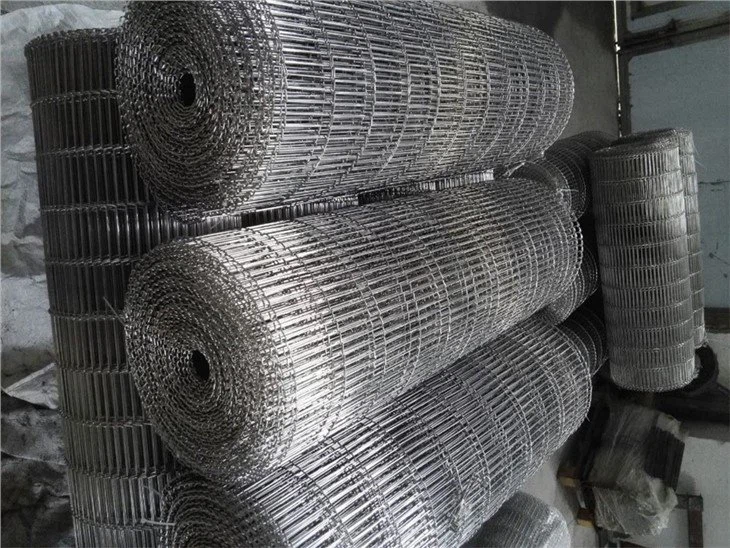
Ladder mesh belts are constructed using a series of parallel wires connected by cross - rods at regular intervals, creating a ladder - like structure. This unique design offers several distinct advantages.
High Strength and Durability
The parallel wire construction of ladder mesh belts provides excellent strength, allowing them to withstand heavy loads. The cross - rods further reinforce the structure, ensuring that the belt can handle the rigors of continuous operation. This durability is crucial in industrial settings where conveyor belts are subjected to high stress, abrasion, and impact. For example, in the mining industry, ladder mesh belts are used to transport large quantities of ore, where their strength and durability are essential for long - term performance.
Good Air and Liquid Permeability
The open design of ladder mesh belts allows for excellent air and liquid permeability. This feature is particularly useful in applications where ventilation or drainage is required. In food processing, for instance, the ability of the belt to allow air to circulate helps in drying and cooling processes, while the liquid permeability enables easy cleaning and sanitation.
Flexibility and Adaptability
Ladder mesh belts are highly flexible, which allows them to be easily adapted to different conveyor configurations, including straight runs, curves, and inclines. This flexibility makes them suitable for a wide range of applications, from simple linear conveyors to complex automated sorting systems.
Requirements of Sorting Applications
Sorting applications involve the separation of different items based on specific criteria such as size, shape, color, or weight. To achieve efficient sorting, conveyor belts used in these applications must meet several requirements.
Precision and Accuracy
Sorting requires a high level of precision and accuracy. The conveyor belt must be able to move items at a consistent speed and position them accurately for the sorting mechanism. Any variation in speed or position can lead to mis - sorting and reduced efficiency.
Compatibility with Sorting Equipment
The conveyor belt must be compatible with the sorting equipment used in the process. This includes sensors, cameras, and mechanical sorting devices. The belt should not interfere with the operation of these devices and should be able to provide a stable platform for item inspection and sorting.
Hygiene and Cleanliness
In many sorting applications, especially those in the food, pharmaceutical, and electronics industries, hygiene and cleanliness are of utmost importance. The conveyor belt must be easy to clean and sanitize to prevent the accumulation of dirt, debris, and microorganisms.
Can Ladder Mesh Belts Be Used for Sorting Applications?
Based on the characteristics of ladder mesh belts and the requirements of sorting applications, the answer is a resounding yes. Here's how ladder mesh belts meet the needs of sorting applications.

Precision Movement
Ladder mesh belts can be driven by precision motors and sprockets, ensuring a consistent and accurate movement of items. The rigid structure of the belt minimizes stretching and slippage, which helps in maintaining a stable speed and position of the items being sorted. This precision is essential for the proper functioning of sorting equipment, such as optical sensors and robotic arms.
Compatibility
The open design of ladder mesh belts makes them highly compatible with a wide range of sorting equipment. Sensors can easily detect items on the belt without being obstructed by the belt structure. For example, in a color - sorting application, cameras can accurately capture the color of items passing over the ladder mesh belt, allowing for efficient separation based on color.
Hygiene and Cleanliness
As mentioned earlier, the air and liquid permeability of ladder mesh belts make them easy to clean. They can be washed with water and cleaning agents, and the open structure allows for quick drying. This makes them suitable for sorting applications in industries where strict hygiene standards are required.
Advantages of Using Ladder Mesh Belts in Sorting Applications
In addition to meeting the basic requirements of sorting applications, ladder mesh belts offer several advantages that make them an ideal choice for these processes.
Cost - Effectiveness
Ladder mesh belts are relatively inexpensive compared to some other types of conveyor belts. Their long - term durability also reduces the need for frequent replacements, resulting in lower overall costs. This cost - effectiveness is particularly beneficial for large - scale sorting operations.
Customizability
Ladder mesh belts can be customized to meet the specific needs of different sorting applications. They can be made in different sizes, wire diameters, and cross - rod spacing to accommodate various item sizes and sorting requirements. Additionally, they can be coated with different materials to improve their performance, such as corrosion - resistant coatings for use in harsh environments.
Real - World Examples of Ladder Mesh Belts in Sorting Applications
There are numerous real - world examples of ladder mesh belts being used successfully in sorting applications.
Food Industry
In the food industry, ladder mesh belts are used to sort fruits and vegetables based on size, color, and quality. For example, in a tomato - sorting line, the belts transport tomatoes to a series of sensors and sorting devices that separate them into different grades. The open design of the belt allows for proper ventilation, which helps in maintaining the freshness of the produce.
Recycling Industry
In the recycling industry, ladder mesh belts play a crucial role in sorting different types of waste materials. They are used to transport waste to sorting stations where sensors and mechanical devices separate plastics, metals, and paper. The durability of the belt ensures that it can handle the heavy and sharp objects often found in recycling streams.
Comparison with Other Types of Conveyor Belts for Sorting
While ladder mesh belts are well - suited for sorting applications, it is important to compare them with other types of conveyor belts.
Solid Conveyor Belts
Solid conveyor belts are often used in sorting applications, but they have some limitations. Unlike ladder mesh belts, solid belts do not offer good air and liquid permeability, which can be a problem in applications where ventilation or drainage is required. Additionally, solid belts may be more difficult to clean, especially in industries with strict hygiene standards.
Modular Conveyor Belts
Modular conveyor belts are another popular choice for sorting applications. They are highly customizable and can be easily repaired. However, they may be more expensive than ladder mesh belts, and their complex structure may make them more difficult to clean in some cases.
Conclusion
In conclusion, ladder mesh belts are an excellent choice for sorting applications. Their high strength, durability, precision, compatibility with sorting equipment, and ease of cleaning make them well - suited for a wide range of industries and sorting requirements. As a supplier of ladder mesh belts, I am confident in the performance and reliability of our products.
If you are looking for a conveyor belt solution for your sorting application, I encourage you to consider our ladder mesh belts. Our team of experts can work with you to understand your specific needs and provide a customized solution. For more information about our Metal Wire Mesh Belt, Conveyor Mesh Belt, and Mesh Conveor Belt, please feel free to contact us to start a procurement discussion.
References
- "Conveyor Belt Handbook" by John Smith
- "Industrial Sorting Technologies" by Mary Johnson
- "Advances in Mesh Conveyor Belt Design" by David Brown