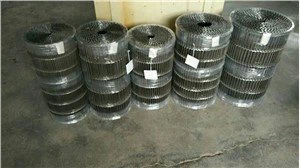

Hey there! As a supplier of Food Conveyor Wire Belts, I know how crucial it is to ensure the quality of these belts. After all, they play a vital role in the food industry, transporting all sorts of food products from one place to another. In this blog, I'll share with you some tips on how to test the quality of a food conveyor wire belt.
Visual Inspection
The first step in testing the quality of a food conveyor wire belt is a simple visual inspection. Take a good look at the belt and check for any signs of damage, such as broken wires, loose joints, or rust. These issues can not only affect the performance of the belt but also pose a risk to the safety of the food being transported.
- Check the Wires: Look closely at the individual wires that make up the belt. They should be straight, without any kinks or bends. If you notice any wires that are broken or frayed, it's a clear sign that the belt needs to be replaced.
- Inspect the Joints: The joints where the wires are connected are also important. Make sure they are secure and free from any gaps or loose ends. Loose joints can cause the belt to come apart during operation, leading to downtime and potential product contamination.
- Look for Rust: Rust is a common problem with metal conveyor belts, especially in environments where there is moisture or exposure to chemicals. If you see any signs of rust on the belt, it's important to address it immediately. Rust can weaken the belt and make it more prone to breakage.
Tensile Strength Testing
Tensile strength is a measure of the maximum amount of force a belt can withstand before breaking. Testing the tensile strength of a food conveyor wire belt is an important step in ensuring its quality and durability.
- Use a Tensile Tester: To test the tensile strength of the belt, you'll need a tensile tester. This device applies a gradually increasing force to the belt until it breaks. The maximum force that the belt can withstand is recorded as its tensile strength.
- Follow the Manufacturer's Specifications: Different types of food conveyor wire belts have different tensile strength requirements. Make sure to follow the manufacturer's specifications when testing the belt. This will ensure that the belt meets the necessary standards for your application.
- Test Multiple Samples: To get an accurate picture of the belt's tensile strength, it's a good idea to test multiple samples. This will help you identify any variations in the strength of the belt and ensure that it is consistent across the entire length.
Abrasion Resistance Testing
Food conveyor wire belts are often subjected to a lot of wear and tear, especially in high-speed or heavy-duty applications. Testing the abrasion resistance of the belt is important to ensure that it can withstand the rigors of daily use.
- Use an Abrasion Tester: An abrasion tester is a device that simulates the wear and tear that the belt will experience in real-world conditions. The tester applies a controlled amount of friction to the belt and measures the amount of material that is worn away.
- Evaluate the Results: The results of the abrasion test will give you an idea of how well the belt will hold up over time. A belt with good abrasion resistance will have a low rate of material loss, indicating that it is durable and long-lasting.
- Consider the Application: The abrasion resistance requirements of a food conveyor wire belt will depend on the specific application. For example, a belt that is used in a high-speed packaging line may require a higher level of abrasion resistance than a belt that is used in a slower-moving conveyor system.
Chemical Resistance Testing
Food conveyor wire belts are often exposed to a variety of chemicals, such as cleaning agents, disinfectants, and food products. Testing the chemical resistance of the belt is important to ensure that it can withstand these chemicals without being damaged.
- Expose the Belt to Chemicals: To test the chemical resistance of the belt, you'll need to expose it to a variety of chemicals that it is likely to come into contact with in its normal use. This can be done by immersing the belt in a solution of the chemical or by applying the chemical directly to the surface of the belt.
- Evaluate the Results: After exposing the belt to the chemicals, carefully examine it for any signs of damage, such as discoloration, swelling, or cracking. If the belt shows any signs of damage, it may not be suitable for use in an environment where it will be exposed to these chemicals.
- Choose the Right Material: Different materials have different levels of chemical resistance. When selecting a food conveyor wire belt, it's important to choose a material that is resistant to the chemicals that it will be exposed to. For example, stainless steel is a popular choice for food conveyor wire belts because it is resistant to many chemicals and is easy to clean.
Hygiene Testing
Hygiene is a top priority in the food industry, and food conveyor wire belts need to be kept clean and free from contaminants. Testing the hygiene of the belt is important to ensure that it meets the necessary standards for food safety.


- Conduct a Microbiological Test: A microbiological test can be used to determine the presence of bacteria, fungi, and other microorganisms on the surface of the belt. This can be done by swabbing the surface of the belt and sending the sample to a laboratory for analysis.
- Evaluate the Results: The results of the microbiological test will give you an idea of the level of contamination on the belt. If the level of contamination is high, it may be necessary to clean and sanitize the belt more frequently or to replace it with a new belt.
- Follow Good Hygiene Practices: In addition to testing the hygiene of the belt, it's important to follow good hygiene practices when using and maintaining the belt. This includes regular cleaning and sanitizing, proper storage, and avoiding contact with contaminated materials.
Conclusion
Testing the quality of a food conveyor wire belt is an important step in ensuring its performance, durability, and safety. By conducting visual inspections, tensile strength testing, abrasion resistance testing, chemical resistance testing, and hygiene testing, you can identify any potential issues with the belt and take the necessary steps to address them.
If you're in the market for a high-quality Food Conveyor Wire Belt, be sure to check out our Food Conveyor Wire Belt products. We also offer a wide range of Stainless Steel Flat Flex Belt and Flat Flex Belts to meet your specific needs.
If you have any questions or would like to discuss your requirements further, please don't hesitate to contact us. We're here to help you find the right conveyor belt for your application.
References
- "Food Conveyor Belt Standards and Regulations." Food Safety Magazine.
- "Testing and Quality Control of Conveyor Belts." Conveyor Belt Manufacturer's Association.
- "Hygiene in the Food Industry: Best Practices for Conveyor Belts." Food Processing Magazine.